Category: Daily Dispatch

  • Mozart’s Death Krampus Was the Culprit?

    Mozart’s Death Krampus Was the Culprit?

    How is it that I never before drew the connection?

    You know, every once in a while, how someone comes up with a new theory about the identity of Jack the Ripper, or claims to have discovered the secret of Elgar’s “Enigma Variations?” Well, it only just occurred to me, I may have solved the mystery of Wolfgang Amadeus Mozart’s death. And it is far more sinister than any alleged poisoning by Antonio Salieri.

    Mozart gave up the ghost on this date in 1791. A prodigy at the keyboard and on the violin, and a composer from the age of five, alas, in death he was also ahead of the curve.

    Mozart was 35 at the time of his passing, yet there was always something childlike in his personality. At times, he seemed much younger than his years. There’s no question that he could be naughty. He was certainly disobedient to his father, autocrat though he was. He defied the Pope, was extravagant in his spending, was inappropriate in his speech, and could be perhaps a mite too arrogant for his own good.

    The cause of Mozart’s death was recorded as “severe military fever.” Even so, over the years, there have been dozens of theories put forth as to the true nature of his passing. Acute rheumatic fever. Streptococcal infection. Influenza. Mercury poisoning. A rare kidney ailment. Even a bad pork chop. Combined, of course, with overwork.

    Alas, we’ll never know for sure. Mozart was buried in a common grave – not a communal grave, or a pauper’s grave, as has been frequently stated, but one whose wooden marker has long since worn away.

    Here’s the thing. December 5, the date of Mozart’s passing, also happens to be Krampusnacht. As a former native of Salzburg and later Vienna, Mozart should have known better. Because, you see, Austria is the dark, beating heart of the Christmas devil.

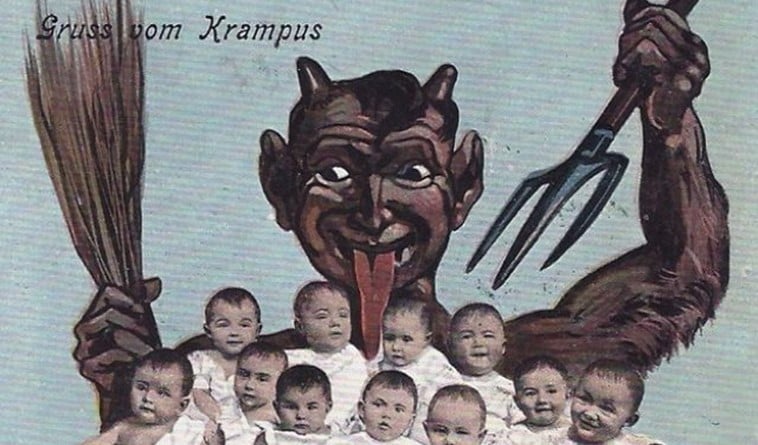
    What exactly is Krampus? Why, he’s St. Nicholas’ austere helper. Horned, hairy, and egregiously long-tongued, Krampus emerges from his Alpine domain to assist the patron saint of children on the eve of his feast day. Saint Nick bestows small gifts to all the good girls and boys. The rest are handed over to Krampus.

    For milder offenses, there is the sting of the switch; for the especially ill-behaved, there are chains, a short ride in a wicker basket, and drowning in a stream or immolation by hellfire. When a recalcitrant child hears the dull clatter of approaching cow-bells on December 5, he knows it’s all over. With anxiety a thousand times worse than the anticipation of a bad report card, the wee sinner pulls the sweat-soaked blankets over his head and prays vociferously for a stocking full of coal.

    No doubt, Mozart was a chronic offender. Could he have withstood a sound thrashing in his weakened state?

    Confutatis maledictus, indeed.
  • Mozart’s Death Krampus Was to Blame?

    Mozart’s Death Krampus Was to Blame?

    How is it that I never before drew the connection?

    You know, every once in a while, how someone comes up with a new theory about the identity of Jack the Ripper, or claims to have discovered the secret of Elgar’s “Enigma Variations?” Well, it only just occurred to me, I may have solved the mystery of Wolfgang Amadeus Mozart’s death. And it is far more sinister than any alleged poisoning by Antonio Salieri.

    Mozart gave up the ghost on this date in 1791. A prodigy at the keyboard and on the violin, and a composer from the age of five, alas, in death he was also ahead of the curve.

    Mozart was 35 at the time of his passing, yet there was always something childlike in his personality. At times, he seemed much younger than his years. There’s no question that he could be naughty. He was certainly disobedient to his father, autocrat though he was. He defied the Pope, was extravagant in his spending, was inappropriate in his speech, and could be perhaps a mite too arrogant for his own good.

    The cause of Mozart’s death was recorded as “severe military fever.” Even so, over the years, there have been dozens of theories put forth as to the true nature of his passing. Acute rheumatic fever. Streptococcal infection. Influenza. Mercury poisoning. A rare kidney ailment. Even a bad pork chop. Combined, of course, with overwork.

    Alas, we’ll never know for sure. Mozart was buried in a common grave – not a communal grave, or a pauper’s grave, as has been frequently stated, but one whose wooden marker has long since worn away.

    Here’s the thing. December 5, the date of Mozart’s passing, also happens to be Krampusnacht. As a former native of Salzburg and later Vienna, Mozart should have known better. Because, you see, Austria is the dark, beating heart of the Christmas devil.

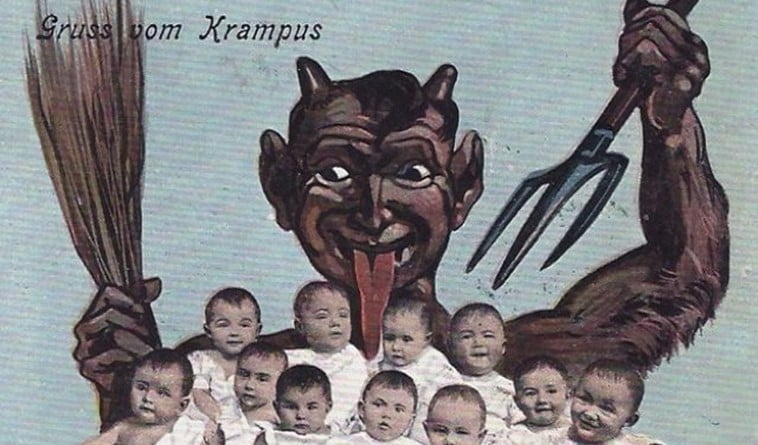
    What exactly is Krampus? Why, he’s St. Nicholas’ austere helper. Horned, hairy, and egregiously long-tongued, Krampus emerges from his Alpine domain to assist the patron saint of children on the eve of his feast day. Saint Nick bestows small gifts to all the good girls and boys. The rest are handed over to Krampus.

    For milder offenses, there is the sting of the switch; for the especially ill-behaved, there are chains, a short ride in a wicker basket, and drowning in a stream or immolation by hellfire. When a recalcitrant child hears the dull clatter of approaching cow-bells on December 5, he knows it’s all over. With anxiety a thousand times worse than the anticipation of a bad report card, the wee sinner pulls the sweat-soaked blankets over his head and prays vociferously for a stocking full of coal.

    No doubt, Mozart was a chronic offender. Could he have withstood a sound thrashing in his weakened state?

    Confutatis maledictus, indeed.
  • Alex North Film Music Pioneer

    Alex North Film Music Pioneer

    This afternoon on The Classical Network, we are well and truly North-bound.

    Alex North was born in Chester, Pennsylvania (just outside of Philadelphia), on this date in 1910. His journey took him from a working class background to the Curtis Institute of Music, the Juilliard School, and the Moscow Conservatory. He also studied with Aaron Copland and Ernst Toch.

    He became involved with the Federal Theatre Project. He worked in ballet, especially with Martha Graham and Anna Sokolow. He accompanied the latter to Mexico, where he had an opportunity to study with Silvestre Revueltas. Perhaps not coincidentally, his three North American teachers, Copland, Toch, and Revueltas, had all worked in film.

    North wrote his first film score as far back as the 1930s, around the time he met up with director Elia Kazan. North was drafted during the war, and put his talent to use writing music for the Office of War Information documentaries.

    With the cessation of hostilities, he returned to the theater. He also composed some concert pieces. It was his theatre scores for plays like “A Streetcar Named Desire” that earned him an invitation to Hollywood, where he wrote the music for Kazan’s classic film adaptation. It was the first time jazz would be fully integrated into an onscreen drama, as opposed to being played in the background of a given scene. Its success opened the door to a new “film score” sensibility, paving the way for composers like Elmer Bernstein, Henry Mancini, and his beloved Duke Ellington.

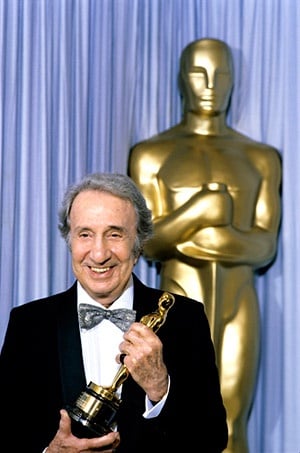
    In all, North wrote 50 film scores, racking up 15 Academy Award nominations, yet never taking home the prize. In 1986, he received lifetime achievement recognition from the Academy, the first composer to be so honored.

    There were times, during the course of his career, when his music took on an independent life, distinct from the films for which it was written. He scored major hits with “Unchained Melody” (originally written for the film “Unchained” and recorded some 500 times) and the love theme from “Spartacus.” The original soundtrack to “A Streetcar Named Desire” also sold extremely well.

    His acclaimed contribution to “Spartacus” didn’t keep the film’s director, Stanley Kubrick, from rejecting North’s score for “2001: A Space Odyssey” – without telling him. North found out only at the film’s premiere. But director John Huston was very happy to have him. Later in his career, North became Huston’s composer of choice, for films like “The Misfits,” “Under the Volcano,” “Prizzi’s Honor,” and “The Dead.”

    I hope you’ll me today for North’s rarely-heard Concerto for Piano and Orchestra with Trumpet Obbligato, and yes, selections from “Spartacus,” among my featured works. We’ll also observe the birthdays of André Campra, Michel Pignolet de Montéclair, and Sir Hamilton Harty.

    Then it’s off to the north countries for music by Carl Nielsen and Jean Sibelius on “Music from Marlboro” at 6:00.

    We’ll face true North, from 4 to 7 p.m. EST, on WWFM – The Classical Network and wwfm.org.


    BETTER LATE THAN NEVER: North with his honorary Oscar

  • Nielsen & Sibelius at Marlboro School of Music and Festival

    Nielsen & Sibelius at Marlboro School of Music and Festival

    We head north on this week’s “Music from Marlboro” for selections by the most famous composers from Denmark and Finland, respectively.

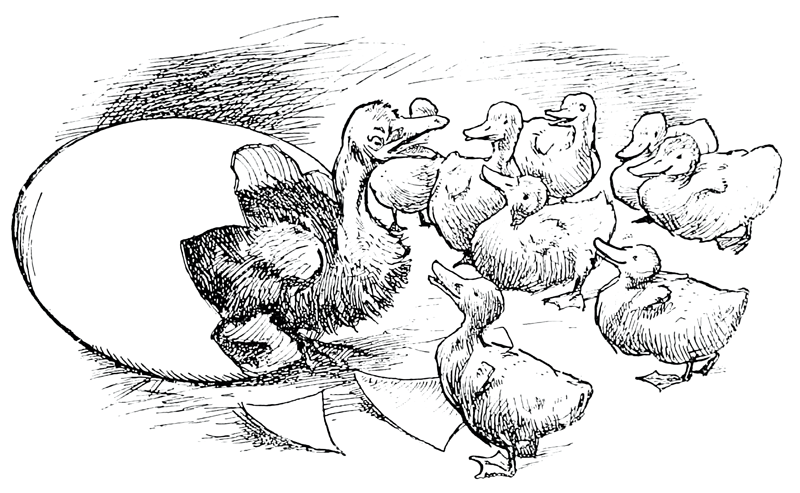
    Like “The Ugly Duckling” of his compatriot, Hans Christian Andersen, Carl Nielsen emerged from humble beginnings to blossom into Denmark’s national composer. Internationally, Nielsen has flitted in and out of the seemingly inescapable shadow of Finnish master Jean Sibelius. Both men were born in 1865. In fact, Nielsen was six months older. But it is an unfair comparison, not so much apples and oranges; more like kipper and pickled herring.

    The very fact that Nielsen is not referred to reductively as “The Sibelius of Denmark” is attributable to an unusually strong individual voice. His music is modern, yet traditional; Scandinavian, yet Germanic. Most important, it is full of personality, freshness and vitality.

    Nielsen’s Wind Quintet of 1922 reflects the composer’s optimism and good humor. These he retained despite great personal, professional, and global turmoil. Each part of the quintet was tailored to the personality of the individual performer for which it was written (all members of the Copenhagen Wind Quintet). There is also something of the outdoors about the piece. Nielsen was always fascinated by nature, and there are ample suggestions of bird song woven into the texture of the work’s pastoral neoclassicism.

    We’ll enjoy a recording made at Marlboro in 1971, with Paula Robison, flute; Joseph Turner, oboe; Larry Combs, clarinet; William Winstead, bassoon; and Robin Graham, horn.

    Sibelius too was influenced by nature. However, the very subtitle of his String Quartet in D minor, “Voces Intimae,” suggests a looking inward. The piece was composed in 1909, between the Third and Fourth Symphonies. It is the only chamber work of Sibelius’ maturity. The composer wrote to his wife, “It turned out as something wonderful. The kind of thing that brings a smile to your lips at the hour of death. I will say no more.”

    If Nielsen suggests the Ugly Duckling, Sibelius is more like the Swan of Tuonela.

    We’ll hear his quartet performed at the 2005 Marlboro Music Festival, by Dan Zhu and Sarah Kapustin, violins; Samuel Rhodes, viola; and Amir Eldan, cello.

    The prevailing winds will be from the north (strings, too, for that matter), on the next “Music from Marlboro,” this Wednesday evening at 6:00 EST, on WWFM – The Classical Network and wwfm.org.

    Marlboro School of Music and Festival: Official Page

  • Giving Tuesday on The Classical Network

    Giving Tuesday on The Classical Network

    It’s December 3, and we’re still feeling the aftershocks of Thanksgiving – and also perhaps the gravitational pull, a little bit, of Christmas.

    It is the season of giving, and on this Giving Tuesday, The Classical Network will salute a number of non-profit organizations that continue to make a difference in our community. WWFM hosts will conduct brief interviews throughout the day, from 10:15 a.m. to 5 p.m., with representatives from the following:

    HomeFront (10:15 a.m.); SAVE, A Friend to Homeless Animals (11 a.m.); Trenton Music Makers (2 p.m.); Womanspace, Inc. (3:30 p.m.); Princeton Senior Resource Center – PSRC (4:15 p.m.); and Trenton Area Soup Kitchen (5 p.m.)

    Tune in to learn more and see how you, too, can lend a helping hand.

    Of course, we’ll also serve up ample helpings of music along the way. Today’s Noontime Concert is a kind of Early Music Advent program. The Salisbury Four will present “The Soft Complaining Flute,” with selections from the 16th and 17th centuries. The program was presented last December, as part of the Midtown Concerts series, hosted by Gotham Early Music Scene, or GEMS, at the chapel of St. Bartholomew’s Church, 325 Park Avenue, in midtown Manhattan. Free concerts are held at St. Bart’s every Thursday at 1:15 p.m.

    GEMS supports artists and organizations in New York City devoted to Early Music. You can learn more and view a complete schedule by visiting the events calendar at gemsny.org.

    Following today’s concert broadcast, and in between interviews, I’ll be peppering my playlist with music of love, thanks, and concern for our fellow human beings, including Michael Abels’ “Global Warming” (the title inevitably suggests climate change, but the music itself celebrates the coming together of the world’s diverse cultures), Beethoven’s String Quartet No. 15 in A minor, Op. 132 (its third movement is inscribed by the composer, “Holy song of thanksgiving of a convalescent to the Deity”), and Aaron Copland’s suite from “The Tender Land” (with its song of thanks, “The Promise of Living”).

    In addition, apropos of our visit from Trenton Music Makers, we’ll hear “The Music Makers” by Sir Edward Elgar.

    You don’t have to give ‘til it hurts. It actually feels pretty good.
    Giving makes the world a better place. Consider offering your time and support to those in our community who make it their mission to help others.

    Music is hope. It’s consolation, and it’s inspiration. It’s the gift that keeps on giving, from 12 to 4 p.m. EST, on WWFM – The Classical Network and wwfm.org.

Tag Cloud

Aaron Copland (93) Beethoven (95) Composer (114) Film Music (137) Film Score (143) Film Scores (255) Halloween (94) John Williams (195) KWAX (229) Leonard Bernstein (103) Marlboro Music Festival (125) Movie Music (152) Mozart (88) Opera (208) Philadelphia Orchestra (89) Picture Perfect (174) Princeton Symphony Orchestra (108) Radio (88) Ross Amico (244) Roy's Tie-Dye Sci-Fi Corner (290) The Classical Network (101) The Lost Chord (268) Vaughan Williams (103) WPRB (396) WWFM (881)

DON’T MISS A BEAT

Receive a weekly digest every Sunday at noon by signing up here


RECENT POSTS