Tag: Bernard Herrmann

  • Bernard Herrmann: Greatest Film Composer?

    Bernard Herrmann: Greatest Film Composer?

    Was Bernard Herrmann the greatest film composer who ever lived? If such a claim could be supported, I’d say it’s quite possibly so. He’s not the first composer I turn to for purely musical enjoyment – I’m more of a Korngold/Rózsa/John Williams kind of guy – but has anyone more consistently found the perfect sound to support an on-screen image?

    And Herrmann was never one to go for the low-hanging fruit. Take his score for “The Day the Earth Stood Still” (1951). Herrmann’s concept of extra-terrestrial music incorporates violin, cello, electric bass, two theremins, two Hammond organs, a large studio electric organ, three vibraphones, two glockenspiels, two pianos, two harps, three trumpets, three trombones and four tubas. Overdubbing and tape-reversal techniques were also employed. Now this guy was a composer!

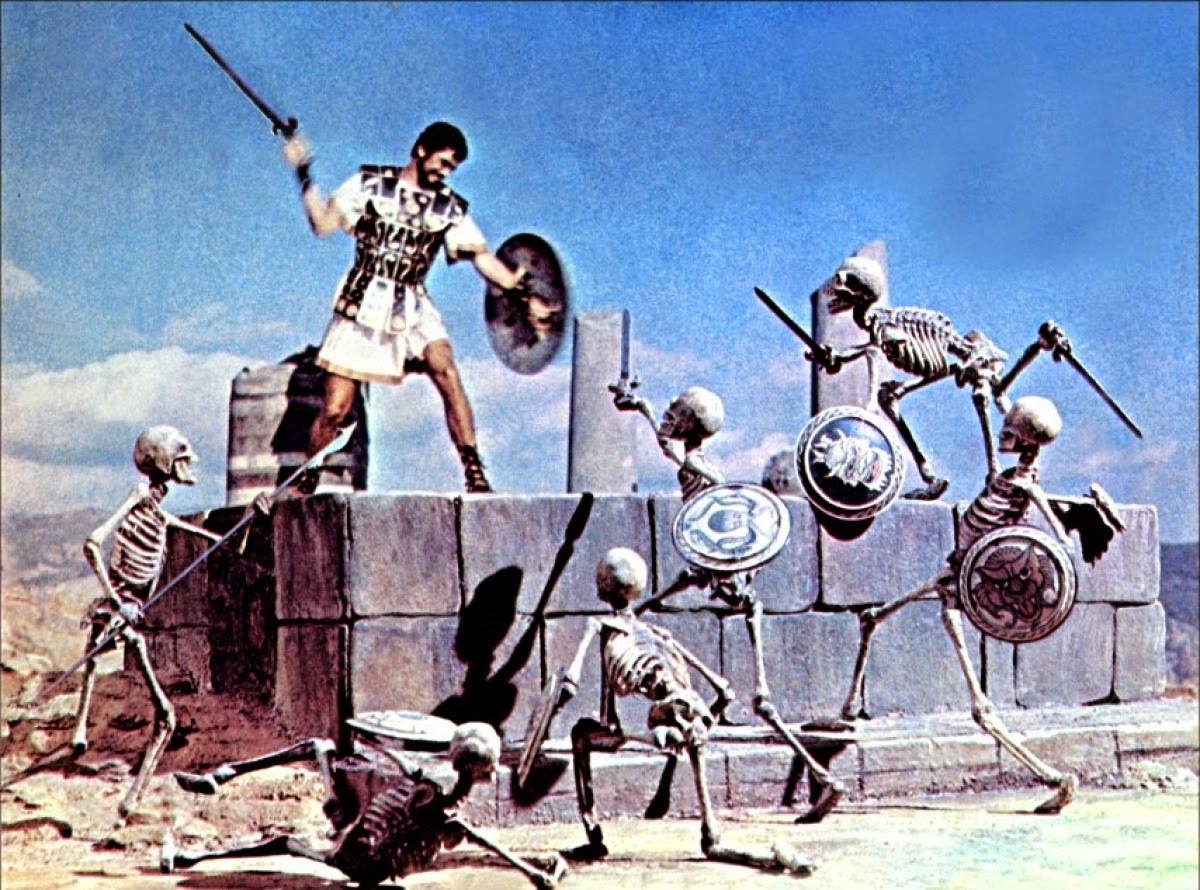
    His music for Alfred Hitchcock’s “Pyscho” (1960) was all strings; the brawny score to the mythological “Jason and the Argonauts” (1963) eschewed them. He could be wry (“The Devil and Daniel Webster”), romantic (“The Ghost and Mrs. Muir”), downbeat (“Taxi Driver”), or any combination of the three (“Citizen Kane”).

    Unfortunately, my weekly film music show, “Picture Perfect,” will be preempted today since we still haven’t hit our goal of $70,000 for the end of our fiscal year, which will arrive, whether we like it or not, at midnight the morning of July 1. However, I am scheduled to be on the air earlier in the day today, albeit in the capacity of “wingman,” from 11 a.m. to 2 p.m. I won’t be the one doing the programming, but you can be sure I will insinuate some Bernard Herrmann into the playlist on his birthday.

    JUST IN: I’ll also be around in the 6:00 hour this evening, so you’ll hear a little more Herrmann then.

    Please support us. There aren’t very many radio stations on which you’ll hear Bernard Herrmann’s music with regularity. Call now at 1-888-232-1212 or make a contribution online at wwfm.org. I wish I could bring you a full hour of Herrmann, but we need to make this goal! “Picture Perfect” will return next Friday at 6 p.m. In the meantime, thank you for supporting WWFM – The Classical Network.


    Herrmann with Orson Welles (left) and Alfred Hitchcock

  • Madness & Piano Movie Music on WWFM

    Madness & Piano Movie Music on WWFM

    This week on “Picture Perfect,” practice makes psychotic, as we listen to music from movies about madness and the piano.

    Laird Cregar plays an unhinged pianist-composer, who, whenever he hears a loud, discordant sound, is compelled to commit murder, in the 1945 film “Hangover Square.” Bernard Herrmann wrote the moody, romantic score, which includes a piano concerto, played by Cregar’s character during the film’s conflagration finale.

    Peter Lorre is an unstable musicologist who is haunted by the disembodied hand of a murdered pianist with a penchant for Brahms’ arrangement of Bach’s Chaconne, in “The Beast with Five Fingers,” from 1946. Max Steiner wrote the music. The piano is played on the film’s soundtrack by Victor Aller, the brother-in-law of Felix Slatkin, and therefore Leonard Slatkin’s uncle.

    Alan Alda plays a frustrated pianist who falls in with a ring of Satanists, in “The Mephisto Waltz” from 1971. This time, Jerry Goldsmith blends Franz Liszt with amplified instruments and electronics to memorably eerie effect. Five years later, Goldsmith would win his only Academy Award for his music to “The Omen.”

    Finally, Hans Conried plays a dictatorial pedagogue in “The 5000 Fingers of Dr. T,” released in 1953, which holds the distinction of being the only feature film written by Dr. Seuss. The film features outrageous production design (including a gargantuan keyboard for 500 enslaved boys) and whimsical songs.

    The composer was Frederick Hollander, born in London. Hollander came to fame in Germany as Friedrich Hollander. His best-known international success was with “The Blue Angel,” with Marlene Dietrich, who introduced his song, “Falling in Love Again. With the rise of the Nazis, Hollander fled to the United States, where he worked on over 100 films.

    It’s madness and the piano this week, on “Picture Perfect,” music for the movies, this Friday evening at 6:00 EDT, on WWFM – The Classical Network and wwfm.org.

  • Hitchcock Cameos A Composer Too?

    Hitchcock Cameos A Composer Too?

    Apparently Alfred Hitchcock was not the only one to make a cameo in his films.

    I share this observation in conjunction with my upcoming salute to English composer Richard Arnell, which will take place this Thursday morning, from 6 to 11 EDT, on WPRB 103.3 FM and wprb.com. Arnell (1917-2009) was born 100 years ago this Friday.

    Patrick Jonathan, who grew close to the composer over the last 20 years of his life, and who provides the liner notes for a compact disc release of Arnell’s Symphonies Nos. 4 & 5 featuring Warren Cohen and the MusicaNova Orchestra, on the Con Brio Recordings label, has been quite generous with personal anecdotes, documents and photographs.

    I found this story particularly fascinating, since I must have seen the film in question eight or ten times, and of course I am an enormous Bernard Herrmann fan:

    “Here’s an anecdote that gives some idea of how being Tony’s friend was always exciting and fun. I’ve enclosed a photo, even though I know your tribute is a radio show, just for context.

    “One evening in the mid-1980s I got a call from him to ask whether I was watching TV. He asked me if I wouldn’t mind turning on the channel that was showing Hitchcock’s ‘The Man Who Knew Too Much’ which was already more than halfway through its broadcast. He asked me to concentrate on the scene towards the climax when James Stewart gets out of a taxi at the Albert Hall (the denouement was to feature an assassination attempt timed to coincide with a cymbal clash during a symphonic performance). I wasn’t to concentrate on the actors but on the posters in the background. To my amazement I saw his name featured prominently there!

    “I spoke to him after the film had finished and he explained that he had been a close friend of Bernard Herrmann, who composed the score for the film. One of the reasons why Herrmann composed such exceptional scores (‘Psycho’, ‘Citizen Kane’, etc.) was because he didn’t get involved at the edit stage just to work from cues, but immersed himself in the production process, regularly sitting in on the film set and getting a feel for the project as it progressed. He had asked Arnell to come along with him on his visits so often that Hitchcock pulled him aside and asked who this young man was. Herrmann explained that he was maybe England’s most gifted contemporary symphonist at which point Hitchcock, who loved to insert in-jokes into his movie decided that the two composers’ names be printed on posters by the prop department so they could feature in the movie. That’s how Arnell, somehow, got himself a ‘featured role’ in a Hitchcock classic!”

  • Hitchcock & Herrmann: The Torn Curtain Fall

    Hitchcock & Herrmann: The Torn Curtain Fall

    Composer Bernard Herrmann produced three indisputable masterpieces with Alfred Hitchcock: “Vertigo,” “North by Northwest,” and “Psycho” (the biggest success of them all).

    However, Hitchcock became increasingly insecure as things began to change within the studio system. The emphasis shifted more and more to the bottom line, and the pressure exerted extended to every aspect of his subsequent films.

    Following “The Birds” and “Marnie,” Hitchcock became desperate for another hit. It was the studio’s thinking that its music scores should forthwith be attuned to a younger sensibility. In particular, they were interested in a hit single which would help promote their films. Herrmann’s reliance on a symphony orchestra was deemed old fashioned.

    By the time Hitchcock and Herrmann began work on “Torn Curtain,” in 1966, the tension between director and composer was at a breaking point. When Herrmann didn’t produce what Hitchcock requested, the composer was fired halfway through the first day’s recording sessions.

    Herrmann’s replacement was John Addison, who was a hot commodity, having won the Academy Award in 1963 for his music for Tony Richardson’s freewheeling adaptation of “Tom Jones.” Ironically, instead of going “popular,” as the studio wanted, save for one incongruous, Mancini-esque song at the end, Addison did what all of Hitch’s subsequent composers did – he emulated Herrmann. “Torn Curtain” failed to gain traction with younger audiences, and the film was not a success.

    Herrmann and Hitchcock would never work together again. The “Torn Curtain” debacle spelled the end of one of the greatest artistic partnerships in all of cinema.

    Join me for selections from Herrmann’s original, rejected score, alongside jettisoned music for “2001: A Space Odyssey” (by Alex North), “Edge of Darkness” (John Corigliano) and “The Battle of Britain” (Sir William Walton), this Friday evening at 6:00 EDT. It’s an hour of rejected scores on “Picture Perfect,” music for the movies, on WWFM – The Classical Network and wwfm.org.


    PHOTO: Hitch and Herrmann – who’d have predicted anything could have gone wrong?

  • Toy Movie Music on Classical Network

    Toy Movie Music on Classical Network

    With everyone still reeling from Christmas, I thought it would be appropriate to focus on music from movies about toys, including selections from “Citizen Kane” (shhh, don’t give it away), with music by Bernard Herrmann; “Pee Wee’s Big Adventure” (it’s in the basement of the Alamo!), with music by Danny Elfman; “Toccata for Toy Trains” (Charles and Ray Eames love vintage toys), with music by Elmer Bernstein; and “Toy Story” (not much of a stretch there), with music by Randy Newman.

    There will be toys everywhere this week, on “Picture Perfect,” music for the movies, this Friday evening at 6:00 EST, on WWFM – The Classical Network and at wwfm.org.

Tag Cloud

Aaron Copland (92) Beethoven (95) Composer (114) Film Music (123) Film Score (143) Film Scores (255) Halloween (94) John Williams (187) KWAX (229) Leonard Bernstein (101) Marlboro Music Festival (125) Movie Music (138) Opera (202) Philadelphia Orchestra (89) Picture Perfect (174) Princeton Symphony Orchestra (106) Radio (87) Ralph Vaughan Williams (85) Ross Amico (244) Roy's Tie-Dye Sci-Fi Corner (290) The Classical Network (101) The Lost Chord (268) Vaughan Williams (103) WPRB (396) WWFM (881)

DON’T MISS A BEAT

Receive a weekly digest every Sunday at noon by signing up here


RECENT POSTS