Tag: Bernard Herrmann

  • Dystopian Film Soundtracks

    Dystopian Film Soundtracks

    If you think the world is in rough shape now, consider tomorrow.

    This week on “Picture Perfect,” gaze into the crystal ball for an hour of dystopian visions – glimpses of a bleak future rendered hopeful, in large part, through music.

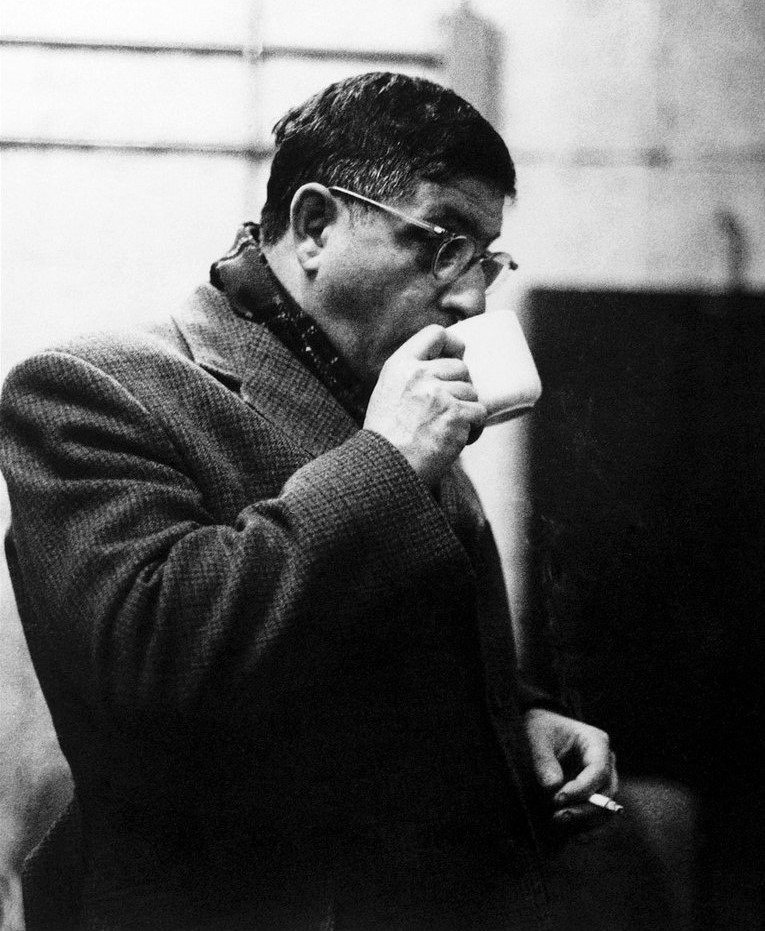
    “Fahrenheit 451” (1966), based on the Ray Bradbury novel, presents a society in which books are outlawed by the state and burned as a means to control the masses. The title refers to the alleged temperature at which paper will ignite. Oskar Werner and Julie Christie star in this Francois Truffaut-directed film. Composer Bernard Herrmann finds the heart at fire’s center.

    A robot is left behind to clean up a long-abandoned Planet Earth, in “WALL-E” (2008), one of Pixar’s finely-crafted entertainments. This one has a serious subtext, about rampant consumerism and its impact on an earth made uninhabitable by the sheer volume of garbage. But there’s also a love story, as WALL-E pursues another robot into outer space, with fate-changing consequences. The inventive score is by Thomas Newman.

    As dystopias go, Steven Spielberg’s “A.I.: Artificial Intelligence” (2001) is a little more unpleasant than most. “A.I.” grew out of an incomplete project of Stanley Kubrick. Based on Brian Aldiss’s short story, “Super-Toys Last All Summer Long,” the film stars Haley Joel Osment as a child-like android programmed to love, only to be rejected by his adopted family. Abrasive blood sport, unpleasant visions of a debauched city, and human extinction ensue. A great time is had by all!

    Also, the film doesn’t know when to end. I hate this movie.

    That said, John Williams gives it his usual best. The voice of soprano Barbara Bonney graces the admittedly gorgeous soundtrack.

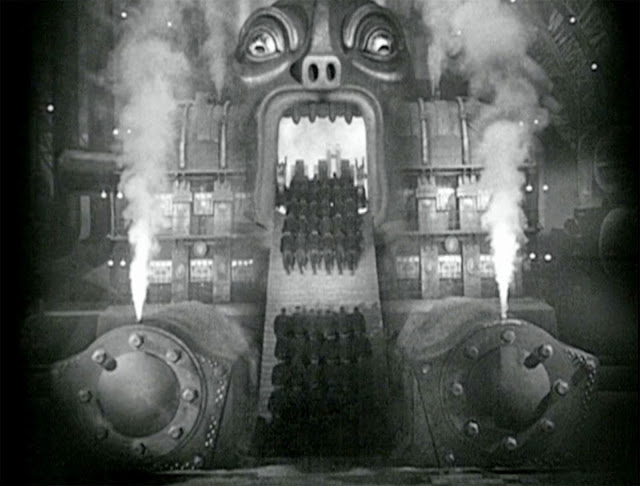
    One of the landmarks of silent cinema, Fritz Lang’s “Metropolis” (1927) is an eerily prescient vision of a world divided between the “haves” and “have-nots.” Once seen, the subterranean hell of the workers “hive” is not soon to be forgotten. So much of the film continues to resonate, even as its iconography is shamelessly recycled.

    Gottfried Huppertz’s original score already adheres to the Straussian model of Golden Age film scores, with leitmotifs representing the characters and ideas. It’s a concept that became associated with Max Steiner and Erich Wolfgang Korngold, and which has had an enormous influence on film composers down through the decades, all the way to John Williams and beyond.

    Learn more about the challenges of writing such a complex score – which was performed live, with orchestra, at showings of the movie, even as the film was still being edited right up until its premiere – when listening to tonight’s show.

    In the meantime, hang on to your humanity! Join me for these cautionary tales about totalitarian government, corporate control, and technology gone awry, on “Picture Perfect,” this Friday evening at 6:00 EST, on WWFM – The Classical Network and wwfm.org.

  • Double Your Impact Support Classical Music Now!

    Double Your Impact Support Classical Music Now!

    It’s an afternoon of thrills and suspense!

    I hope you’ll join us on The Classical Network, as David Osenberg and I sprint to meet another member challenge – today in the amount of $2000.

    If we reach $2000 in listener donations, BEFORE 6:00 EST, we’ll get to tally in an ADDITIONAL $2000 toward our fall fundraiser. In other words, that’s a TOTAL OF $4000. Anything you contribute toward the $2000 is DOUBLED. $40 becomes $80… $50 becomes $100… You know the drill.

    To get in on the action and really make a difference, please call us before 6 p.m. at 1-888-232-1212, or join us online at wwfm.org.

    We’re chipping away at this campaign, and by the end of this afternoon, if we’re successful, we should be in position to wrap things up on Monday morning.

    Don’t forget, for a contribution of $200, you can pick up an invitation to our Gathering of Gratitude Gala, which will be held at the Mercer County Community College Conference Center, on the West Windsor campus, next Friday (St. Cecilia’s Day), from 6 to 9 p.m. That invitation is good for you and a guest. There will be food, there will be drink, there will be scintillating conversation with our hosts. And there will be music, lots of music.

    Our hope is to always be able to bring you plenty of music, but it’s only possible with the support of our generous listeners. When’s the last time you’ve contributed? Has it been a while? Why not toss us a few bucks? Your bones are doubled.

    Once we’ve met this challenge (hopefully), we’ll all be able to kick back and enjoy music by Bernard Herrmann composed for the master of suspense, Alfred Hitchcock, on this week’s “Picture Perfect.”

    The Herrmann-Hitch partnership, of course, yielded such classics as “Vertigo,” “North by Northwest” and “Psycho.” We won’t be hearing any of those. Instead, we’ll have less frequently-heard music written for some of their other collaborations – “Marnie,” “The Trouble with Harry,” “The Wrong Man,” “Torn Curtain” and “The Man Who Knew Too Much.”

    The suspense is killing us! Help us meet this goal! Call us now at 1-888-232-1212, or contribute online (before 6 p.m., please!) at wwfm.org.

    Thank you for your support of WWFM – The Classical Network and wwfm.org!!

  • Herrmann’s Hitchcock Untold Scores

    Herrmann’s Hitchcock Untold Scores

    In the mid-1950s, composer Bernard Herrmann and Alfred Hitchcock came together for a string of commercial, critical and artistic successes, including, most notably, “Vertigo,” “North by Northwest” and “Psycho.” But the two collaborated on no less than nine films, if we count “The Birds,” on which Herrmann acted as sound consultant.

    This week, on “Picture Perfect,” we’ll have selections from the other five – among them, “Marnie,” “The Trouble with Harry” and “The Wrong Man.”

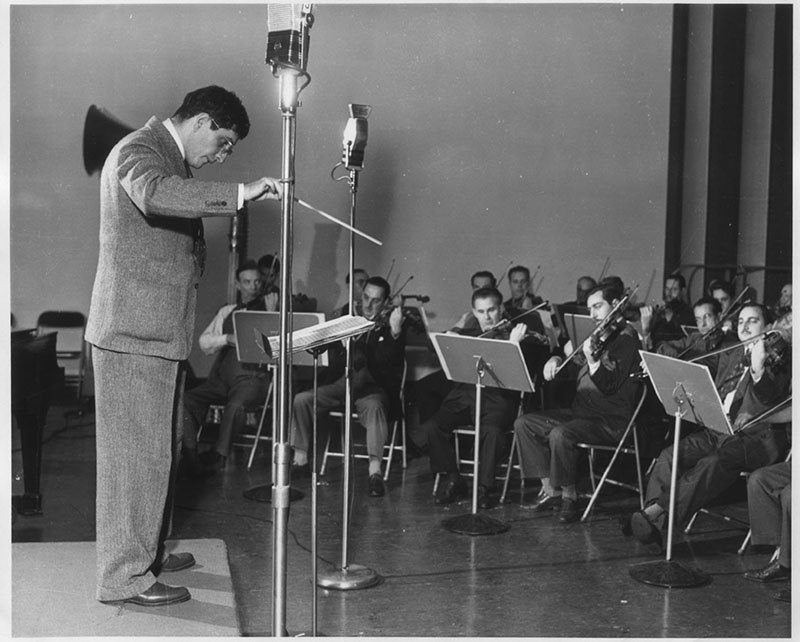
    Herrmann’s reworking of Arthur Benjamin’s “The Storm Clouds Cantata” was used at the climax of the 1956 version of “The Man Who Knew Too Much,” as a frantic James Stewart attempts to thwart an assassination plot at Royal Alert Hall. (In the film, Herrmann himself appears on the podium.)

    We’ll also hear a portion of the rejected score for “Torn Curtain,” the project that ended the Herrmann-Hitchcock association. Hitchcock fired Herrmann, when the composer ignored his instructions to write something light and popular, under studio pressure. John Addison was hired as his replacement, and the film was a failure at the box office.

    In recent years, Herrmann admirers have had several opportunities to sample the composer’s original thoughts. Quentin Tarantino is obviously a fan. Some of Herrmann’s “Torn Curtain” music turns up in “Once Upon a Time in Hollywood.”

    Hitch yourself to Bernard Herrmann. It’s lesser-heard Herrmann-Hitchcock, this Friday evening at 6:00 EST, on WWFM – The Classical Network and wwfm.org.

  • De Palma’s Thrillers Music from Hitchcock’s Heir

    De Palma’s Thrillers Music from Hitchcock’s Heir

    Brian De Palma is an extraordinarily adept filmmaker, who has been criticized for his adherence to “genre trash.” He has always been attracted to suspense and crime thrillers, usually of an especially violent nature, many of them tinged with horror.

    This week on “Picture Perfect,” with Hallowe’en right around the corner, we’ll hear music from four of De Palma’s films.

    It’s hardly surprising that such an admirer of Alfred Hitchcock would also hire Hitch’s signature composer. Bernard Herrmann scored two films for De Palma – “Sisters,” in 1973, and “Obsession,” in 1976.

    “Obsession” is a spin on Hitchcock’s “Vertigo.” A botched rescue attempt results in the death of a businessman’s kidnapped wife. Years later, he encounters someone who could be her doppelganger. The film stars Genevieve Bujold, John Lithgow, and a very tan Cliff Robertson.

    “The Fury,” from 1978, is a supernatural thriller based on a novel by John Farris. Two teenagers, endowed with powers of telekinesis and extra-sensory perception, are targeted by researchers who plan to harness them for their own nefarious ends. For a time, Kirk Douglas has fun as a former CIA agent, and John Cassavetes is a particularly slimy villain. Cassavetes’ comeuppance makes for one of the most memorable movie endings of its era – and we’ll leave it at that!

    Critic Pauline Kael praised the music, which is by none other than John Williams – hot off his third Academy Award, for “Star Wars” – characterizing it as “as elegant and delicately varied a score as any horror film has ever had.”

    Of course, “The Fury” was not the first De Palma film to deal with telekinesis. His adaptation of Stephen King’s “Carrie,” from 1976, became one the decade’s landmark horror films. It broadened King’s popularity and propelled De Palma into the A-list of Hollywood directors. It also essentially launched the careers of Amy Irving, John Travolta, and Nancy Allen, among others. Sissy Spacek was nominated for an Academy Award for her performance in the title role, as was Piper Laurie as Carrie’s overbearing, fundamentalist mother.

    The music was by Pino Donaggio. The director had wanted to continue his collaboration with Herrmann, but the composer died before the film could be completed. Donaggio, though classically trained, made his fortune writing popular songs. His biggest hit was “You Don’t Have to Say You Love Me,” which was recorded by Dusty Springfield and treated to a well-known cover by Elvis Presley. Donnagio went on to become a regular De Palma collaborator, providing the music for seven of his films.

    Finally, we’ll turn our back on horror, to listen to music from a successful period crime thriller, loosely based on the real-life exploits of Eliot Ness and his fellow prohibition agents – “The Untouchables,” from 1987. Kevin Costner plays the by-the-book federal agent who is given a valuable lesson in street smarts by an Irish beat cop played by an Academy Award winning Sean Connery. (“He pulls a knife, you pull a gun. He sends one of yours to the hospital, you send one of his to the morgue. That’s the Chicago way, and that’s how you get Capone.”) Capone is played, incidentally, by a baseball bat wielding Robert De Niro.

    The score is by Ennio Morricone. Morricone, of course, was propelled to fame through his work on Sergio Leone’s spaghetti westerns. He applies some of that same mythmaking skill to this big screen adaptation, which had previously been published as a memoir and developed into a popular television series starring Robert Stack. The high point of the film must be the director’s nail-biting homage to Sergei Eisenstein, a slow motion shoot-out around a baby carriage as it teeters down the stairs of Chicago Union Station.

    Start your weekend with a step in the right direction, with music from the films of Brian De Palma, on “Picture Perfect,” this Friday evening at 6:00 EDT, on WWFM – The Classical Network and wwfm.org.

  • Save Earth Donate to Classical Music WWFM

    Save Earth Donate to Classical Music WWFM

    Every time you support The Classical Network, you make a kindly extra-terrestrial’s heart glow. Every time you don’t contribute – you risk activating the destructive power of Gort!

    It’s the final day of our end-of-the-fiscal-year membership campaign. Please do your part to ensure universal harmony by calling 1-888-232-1212, or by donating online at wwfm.org.

    Then enjoy music from “Cocoon” (James Horner), “The Day the Earth Stood Still” (Bernard Herrmann), and “Close Encounters of the Third Kind” and “E.T. The Extra-Terrestrial” (both by John Williams).

    We come in peace, this Friday evening at 6:00 EDT, on WWFM – The Classical Network and wwfm.org.


    BERNARD HERRMANN BONUS!

    Tune in tonight at 8:00 for a rebroadcast of Herrmann’s music for the radio play “Whitman.” The concert was given at Washington’s National Cathedral on June 1. William Sharp will be heard in the title role, reciting Whitman’s poetry, with the PostClassical Ensemble conducted by Angel Gil-Ordóñez. Also on the program will be Herrmann’s Clarinet Quintet, “Souvenirs de Voyage,” and “Psycho: A Narrative for String Orchestra.”

Tag Cloud

Aaron Copland (93) Beethoven (95) Composer (114) Film Music (129) Film Score (143) Film Scores (255) Halloween (94) John Williams (192) KWAX (229) Leonard Bernstein (103) Marlboro Music Festival (125) Movie Music (144) Mozart (88) Opera (206) Philadelphia Orchestra (89) Picture Perfect (174) Princeton Symphony Orchestra (108) Radio (88) Ross Amico (244) Roy's Tie-Dye Sci-Fi Corner (290) The Classical Network (101) The Lost Chord (268) Vaughan Williams (103) WPRB (396) WWFM (881)

DON’T MISS A BEAT

Receive a weekly digest every Sunday at noon by signing up here


RECENT POSTS