Tag: Bernard Herrmann

  • Piano Madness Movie Music on Picture Perfect

    This week on “Picture Perfect,” Peter Lorre gets more than his share of left-hand piano repertoire, in “The Beast with Five Fingers” (1946). Max Steiner’s score, built on Brahms’ transcription of the Bach Chaconne, is one of the highlights of an hour of music from movies about madness and the piano.

    The program will also include a macabre concerto by Bernard Herrmann, written for the Laird Cregar thriller “Hangover Square” (1945), about a deranged concert pianist in fog-shrouded London. Alan Alda seeks fame at all costs – even Satanism – in “The Mephisto Waltz” (1971), with music by Jerry Goldsmith, and just a touch of Franz Liszt. And power-mad pedagogue Hans Conried lords it over a legion of his long-suffering pupils, in the Dr. Seuss fantasy “The 5,000 Fingers of Dr. T” (1953), with music and songs by Frederick Hollander.

    We’re mad about the piano this week, on “Picture Perfect,” music for the movies, this Saturday evening at 6:00 EDT, on WWFM – The Classical Network and wwfm.org.
  • Piano Madness Movie Music on WWFM

    Piano Madness Movie Music on WWFM

    If the definition of insanity is doing the same thing over and over and expecting a different result, then surely Hanon etudes are a ticket to the madhouse.

    This week on “Picture Perfect,” get keyed-up with music from movies about madness and the piano.

    Whenever he hears a loud, discordant sound, unhinged pianist-composer Laird Cregar is compelled to commit murder, in the 1945 film “Hangover Square.” Bernard Herrmann wrote the moody, romantic score, which includes a piano concerto, played by Cregar’s character during the film’s conflagration finale.

    Peter Lorre is an unstable musicologist who is haunted by the disembodied hand of a murdered pianist with a penchant for Brahms’ arrangement of Bach’s Chaconne, in “The Beast with Five Fingers,” from 1946. Max Steiner was the composer. The piano is played on the film’s soundtrack by Victor Aller, the brother-in-law of Felix Slatkin – also Leonard Slatkin’s uncle.

    Alan Alda plays a frustrated pianist who falls in with a ring of Satanists, in “The Mephisto Waltz” from 1971. This time, Jerry Goldsmith blends Franz Liszt with amplified instruments and electronics to memorably eerie effect. Five years later, Goldsmith would win his only Academy Award for his music to “The Omen.”

    Finally, Hans Conried plays a dictatorial pedagogue in “The 5000 Fingers of Dr. T,” released in 1953. “5000 Fingers” holds the distinction of being the only feature ever written by Dr. Seuss. The film sports an outrageous production design (including a gargantuan keyboard for 500 enslaved boys) and whimsical songs.

    The composer was Frederick Hollander. Born in London, Hollander attained fame in Germany as Friedrich Hollander. His best-known international success was “The Blue Angel,” starring Marlene Dietrich, who introduced his song, “Falling in Love Again.” With the rise of the Nazis, Hollander fled to the United States, where he worked on over 100 films.

    That’s music from movies about madness and the piano this week, on “Picture Perfect.” Practice makes psychotic, THIS SATURDAY EVENING AT 6:00 EDT, on WWFM – The Classical Network and wwfm.org.

  • Bernard Herrmann Bio A Heart at Fire’s Center Review

    Bernard Herrmann Bio A Heart at Fire’s Center Review

    A few days ago, I finished my second reading of Steven C. Smith’s Bernard Herrmann biography, “A Heart at Fire’s Center.” This return engagement, after nearly thirty years, was prompted by Smith’s recent bio of film composer Max Steiner.

    First of all, if you’re a Bernard Herrmann fan or a classic movie buff, and for some reason you haven’t gotten around to it, the book is self-recommending. But if yours is a more casual interest, and you are looking for a good read, I would suggest you pick up the Steiner bio first.

    Not that both books are not well-written, but the layout of the Steiner is more easily digestible. It looks less “dense,” for one thing, with more welcoming fonts, distinguishing narrative and lengthier quoted passages. Also, it’s organized into shorter chapters, with a shrewdly-crafted teaser at the end of each, drawing you into the next. I do much of my reading in bed, and while I could generally get through a chapter of Steiner before beginning to nod, I found the longer form of the Herrmann a bit more challenging. Not that you can’t put it down mid-chapter, but I’m an anal reader.

    I should add that I’m also a slow reader, and if I feel I am not in the proper mindset to get everything out of a book, I will put it down until I know I am alert. Again, this is no reflection on the quality of the book. Smith proves himself to be a fine and engaging writer in both volumes, though it is possible, and hardly surprising, that he’s become even better over three decades.

    I did find more errors in the Herrmann book than I did in the Steiner. I own the original, hardcover edition of “A Heart at Fire’s Center,” from 1991, and not the paperback reissue from 2002, so these may have been corrected. Perhaps the layout has been tweaked, as well. In any case, I don’t want to suggest that it is a shoddy piece of work. It is not!

    The other reason I recommend reading the Steiner biography first is simply that Steiner was an all-around nicer guy. The man was not without his flaws – I have a hard time forgetting one particular act of domestic violence, though I can understand the circumstances that made him susceptible to it – but he comes across, for the most part, both anecdotally and through his own writings, as a happy, playful personality. Not without his stresses and complications, certainly, but loving his work and doing whatever he could to help others.

    Herrmann, on the other hand, was extremely high maintenance. EXTREMELY. There is not a person who knew him for any length of time – and too often that could mean only a few seconds – that was not the focus of insult and verbal abuse. Cumulatively, we are made to realize that this was an unfortunate defense mechanism (Herrmann is not wholly unsympathetic), and that once he blew his stack or became more comfortable, he would often warm up considerably – provided the object of the initial tirade hadn’t already withered away. Herrmann behaved like this with friend and foe alike, and then he wondered why nobody wanted to be around him.

    This is particularly sad, since Bernard Herrmann was possibly the greatest genius at film scoring that ever was. Composers like Max Steiner were monumentally important in establishing the form, pioneering the techniques, and really thinking about the art behind the craft. But Herrmann grasped that music could function on a much deeper level – as more than music, almost. He looked beyond a leitmotivic approach inherited from Wagner – and embraced by Steiner, Korngold, and others – to ponder, probe, and push the boundaries of film itself. He understood not only that music could help the pace of a picture, playing with an audience’s sense of time, he also grasped the psychological depths a score could attain, lending an almost subliminal dimension to the storytelling. He was a master of nuance and tension, and his orchestrations were the most experimental in Hollywood. From “Citizen Kane” to “Taxi Driver,” Herrmann was the king.

    Is he my favorite film composer? No. I admit, on an average day, Korngold and John Williams are more my style. But do I respect Herrmann’s art and marvel at everything he touched? Oh yes. Yes, I do.

    My biggest qualm with the book, and this cannot be changed, is the subject himself. It’s simply exhausting to read account after account of Herrmann blowing his stack and making things worse and worse for himself, as he alienates employers, colleagues, friends, and wives. It’s a horrible flaw in a great artist.

    As a composer, he was always spot-on. His contributions enhanced the films of Orson Welles, Alfred Hitchcock, Ray Harryhausen, Francois Truffaut, Brian DePalma, Martin Scorsese, and many others. Before that, he was a master of music for radio drama (as music director at CBS), and later, he pursued sidelines as a concert conductor (really his dream) and a recording artist.

    Readers with an interest in classical music are also offered glimpses into the broad and unusual repertoire he introduced to American audiences through his radio broadcasts (he was particularly fond of English music), his performances with some of the great symphony orchestras, his relationships and correspondence with Charles Ives, Leopold Stokowski, and John Barbirolli, among others, and the creation of his own concert works, especially his opera, “Wuthering Heights.”

    Herrmann was a man who was suspicious of everything. He certainly didn’t suffer fools. But his hair trigger could be appalling. It’s interesting that so many of those who found themselves at Ground Zero later admitted that Herrmann’s reactions, while extreme, were often not without merit. In artistic and professional matters, he was usually right. A good many of those interviewed even manage to retain a genuine affection for the man. They just couldn’t stand to be around him.

    Remarkably, the Steiner biography does not simply follow the same ground, which makes both volumes worth reading. The composers were different enough, both as people and as artists, and their experiences largely varied, so that both books are absolutely recommended. Smith does a great job of bringing both subjects to life. But if you want to dip a toe in, I’d say start with Steiner.

    Above all, when you watch the movies, pay attention to the music. Composers are not always in total control of what makes it to the screen or how it’s used, but Herrmann was luckier – and more demanding – than most. He also insisted on doing everything himself, from orchestrations to recording. He and Steiner were both dynamos, and, like Steiner, Herrmann lived mostly for his work.

    I must add, for as prickly as he could be around people, Herrmann had infinite patience for animals, and he loved them all. He kept one of his old cars just because the neighborhood squirrels had made it their home. For this alone, I would forgive him everything.


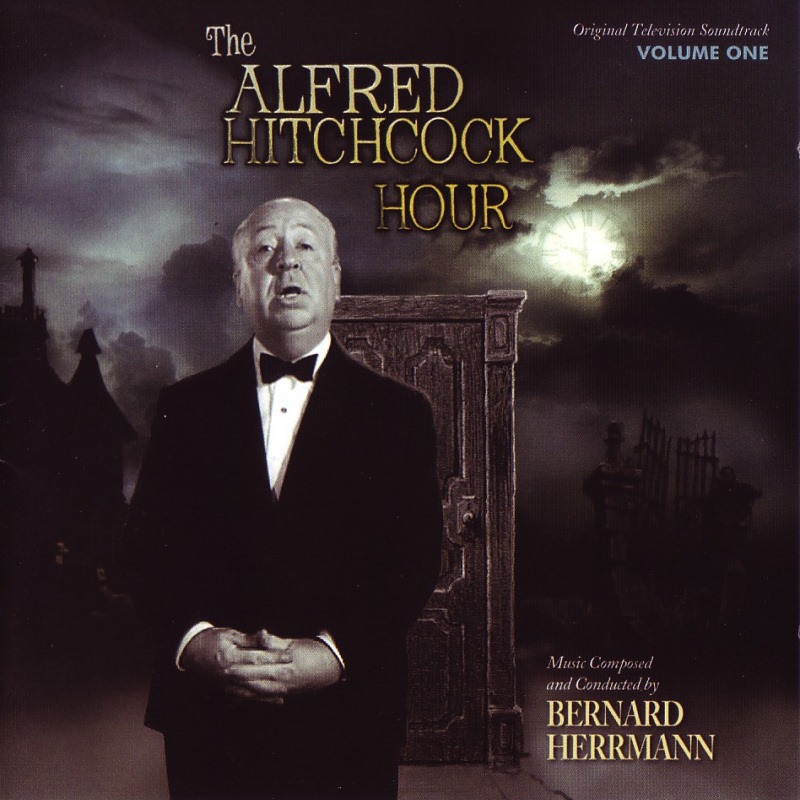
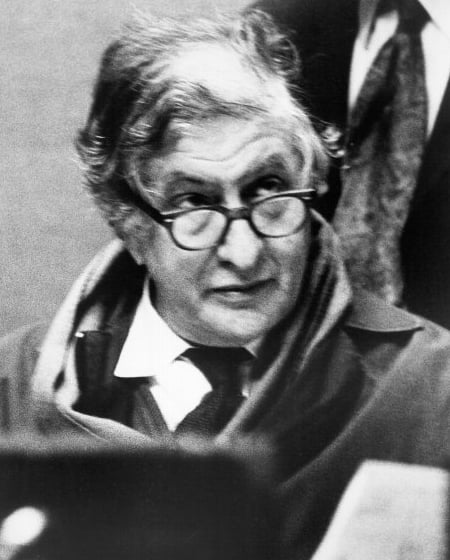
    PHOTOS: Two sides of Herrmann, with two editions of his biography (paperback at top)

  • Citizen Kane Hearst & Opera

    Citizen Kane Hearst & Opera

    Remember that sequence in “Citizen Kane,” when newspaper magnate Charles Foster Kane forces his second wife, Susan Alexander – who has a modest singing voice at best – into the title role of a grand opera, with disastrous results?

    In the original script, the opera was to have been Jules Massenet’s “Thaïs.” If I hadn’t read that in Steven C. Smith’s biography of Bernard Herrmann, “A Heart at Fire’s Center,” I may never have learned of the interesting connection between Massenet and William Randolph Hearst. Hearst, of course – as was well-known even at the time – was the model for Orson Welles’ Kane. Much of what I share below is not in the Herrmann biography. I was spurred to search for it myself. It is certainly worth noting.

    Massenet, like Hearst, had been infatuated with Sibyl Sanderson. Sanderson, unlike her shrill, overpowered “Kane” counterpart, was a naturally gifted singer, for whom Massenet created not only “Thaïs,” but also “Esclarmonde.” “Esclarmonde” provided her with what was then the highest note in all of opera, G above high C, preceded by an F# – which Sanderson nailed with aplomb. Saint-Saëns was also a fan, and likewise crafted one of his own operas, “Phryné,” specifically for her. She must have made for a very convincing courtesan! When asked her favorite role, Sanderson quipped, “The one that allows me to display the most decolletage.”

    In her teenage years, Sanderson and Hearst had been engaged. If I had read about this before in one of the many Welles’ biographies, I had forgotten it, probably since, at the time, for me, Sanderson would have been just another name. Sanderson’s father was a politician and lawyer who became Chief Justice of the Supreme Court of California and, later, a legal advisor to the South Pacific Railroad. Hearst was still quite young, and Sanderson’s father opposed the match. Not long after, she was sent to Europe to study at the Paris Conservatory. Allegedly, Hearst continued to carry the torch for her for many years. Later, following her father’s death, she was joined by her sisters and her mother to live as expatriate socialites.

    As a singer, Sanderson achieved popularity in her adopted city and throughout Europe – Puccini wanted her to sing “Tosca” – however, elsewhere, at London’s Covent Garden and New York’s Metropolitan Opera, she received lackluster reviews. She developed difficulties with her voice and eventually wound up marrying a Cuban sugar heir. At some point along the way, she began the sad descent into alcoholism, exacerbated by depression, and she was claimed by pneumonia at only 38.

    I’ll have to refresh my memory about Welles and find out exactly how he may have learned of this particular Hearst connection. Surely, there were no tell-all biographies, at the time, of the man who threatened to crush everyone involved with the making of “Citizen Kane.”

    As the shooting of the Susan Alexander sequence approached, Welles, characteristically, improvised. He decided it might be better for Herrmann to bypass Massenet’s existing opera, and perhaps create his own, more concise, Oriental pastiche.

    In a telegram to Herrmann, Welles wrote, “Opera sequence is early in shooting, so must have fully orchestrated recorded track before shooting. Susie sings as curtain goes up in first act, and I believe there is no opera of importance where soprano leads with chin like this. Therefore suggest it be original… by you – Mary Garden vehicle… Suggest ‘Salammbo’ which gives us phony production scene of Ancient Rome and Carthage, and Susie can dress like Grand Opera neoclassic courtesan… Here is chance for you to do something witty and amusing – and now is the time for you to do it.”

    The Mary Garden reference is also of interest, since she happened to be a Sanderson pupil. Sanderson introduced Garden to Massenet, who wrote his opera “Chérubin” for her. Garden also created the role of Debussy’s Mélisande. Later, she became director of the Chicago Opera Association and staged the world premiere, in Chicago, of Prokofiev’s “The Love for Three Oranges.”

    The result of Welles’ telegram was the wholly fictional “Salammbô.” The faux opera’s subject is presumably lifted from Flaubert, but Welles’ associate, John Houseman, later revealed that the text was a pidgin creation he had cobbled together from Racine’s “Athalie” and “Phèdre.” As he put it, the result was fairly implausible and unintelligible, but dramatically effective.

    Can you imagine any team of filmmakers today being capable of pulling this off? Welles and Herrmann were in their 20s; Houseman, a little older, was in his late 30s. The creation of this scene would have required a familiarity not only with the conventions of French opera of the Belle Époque (much more superficially parodied in Andrew Lloyd Webber’s “The Phantom of the Opera”), but also the literature that inspired it. Granted, all of the participants were much closer to that world, but they all would have had to have been very well-read and possessed very discerning ears to be able to effectively emulate the genre.

    Here it is as it was seen in the film (with perhaps also a hint of “Salome”):

    Opera 1

    Opera 2

    Already, back in the day, Eileen Farrell showed what could be done with it, when Herrmann conducted the aria on CBS radio. Check out this uncovered gem, which I had never heard in this performance until only a few minutes ago:

    Kiri Te Kanawa goes for the D6 high note (optional) on this album of Herrmann hits, originally set down for RCA Records in the 1970s:

    https://www.youtube.com/watch?v=6Gu7-HsCBfY

    Incidentally, RCA’s Classic Film Scores series, a landmark of its kind – with individual volumes devoted to the music of Korngold, Steiner, Waxman, Rózsa, Newman, and Tiomkin, and a few additional ones devoted specifically to the films of Humphrey Bogart, Errol Flynn, and Bette Davis – has been reissued as a Sony box set. It’s the least expensive incarnation of the series so far. You won’t get the fancy packaging or the liner notes, but you will get hours of transporting music, in what are still the best performances of these scores available. And yes, Te Kanawa does sing Herrmann’s “Salammbô.” If you don’t already own these recordings, they are highly recommended.

    That said, for audiophiles, a series of brand new remasterings of the original RCA material is quietly being undertaken by the Dutton/Vocalion label. So far, they have completed the volumes devoted to Tiomkin, Waxman, Herrmann, Rózsa, Flynn, and Bogart, with bonus tracks included from “Spectacular World of Fantastic Film Scores,” an addendum to the original RCA series, that, for some reason, is not included in the new Sony box. You can search here:

    Home


    PHOTOS: Sibyl Sanderson (left), in one of her more demure outfits, as Thaïs; Dorothy Comingore as Susan Alexander Kane singing Salammbô

  • Herrmann Radio Days A Heart at Fire’s Center

    Herrmann Radio Days A Heart at Fire’s Center

    I’m in the process of rereading Steven C. Smith’s biography of Bernard Herrmann, “A Heart at Fire’s Center,” which I first encountered nearly 30 years ago (!!!), shortly after its publication in 1991. Bernard Herrmann, of course, was one of the great film composers, perhaps the greatest, but he really got his start in the medium of radio. He was hired as a conducting assistant by CBS. It wasn’t long before he was providing original music and serving as musical director of its resident orchestra.

    It is sobering to recall just how high-minded radio was in its infancy, with the arts very much front and center. Classical music, dramatizations of classic literature, and poetry readings with musical accompaniment – all of these were a regular part of the programming at CBS. In fact, the network, in its original incarnation, had been founded by Arthur Judson, a violinist and concert promoter, who had been laughed out of NBC for his idealistic proposals.

    These were not dumbed-down music programs! Toscanini concerts with the New York Philharmonic tended to be a little more conservative (later, of course, the conductor would find a home, with his own orchestra, at NBC), but the programs supervised by Herrmann, then only in his 20s, but already possessed of an encyclopedic knowledge of both music and literature, introduced works by Charles Ives, Henry Cowell, Gian Francesco Malipiero, Alexander Gretchaninov, Nikolai Myaskovsky, Hermann Goetz, Joachim Raff, Niels Wilhelm Gade, Richard Arnell, Lord Berners, Edmund Rubbra, and countless others. Even Schoenberg and Webern could be heard over CBS during those years.

    Herrmann had known Ives personally since he was in his teens. He had discovered Ives’ “114 Songs” in the New York Public Library and was instrumental in shopping them around, even introducing them to Aaron Copland. He studied with Percy Grainger at NYU. Together, the two undertook the bass tuba, since Herrmann wanted to include the instrument in one of his orchestrations. He was also best friends with one of his Brooklyn classmates, Jerome Moross, who himself would become a notable film composer. Herrmann and Moross would sneak into rehearsals of the New York Philharmonic together at Carnegie Hall.

    Herrmann was unfailingly outspoken. Apparently he had no filter. Once, when CBS president William S. Paley balked at one of his proposals, Herrmann snapped, “You’re assuming the public is as ignorant about music as you are.” That’s just the kind of guy Herrnann was. Totally tactless, but usually right. After that, we’re told, he was given near-unlimited freedom over musical programming at CBS.

    Sometimes he would go out of his way to provoke. Once, during a rehearsal, he said to Benny Goodman, “Who told you you could play the clarinet?” Without missing a beat, Goodman responded, “Who told you you could conduct?” Everyone lived in fear of Herrmann’s acid tongue, but no one ever said no, and in fact a great many found his irascible nature to be surprisingly endearing. Often, he would deliberately stir the pot. He routinely provoked the head of the music library, which led to some lively exchanges, but these eventually resulted in a dinner invitation to the librarian’s home.

    I venture to guess, few people currently affiliated with CBS, and even fewer in its audience, have any idea of the network’s roots. It’s interesting to look back on the histories of these institutions and note how careful a balance was maintained between art and commerce. Alongside the radio comedies and entertainment music was plenty to educate the mind, enrich the soul, and ennoble the spirit. But gradually the balance shifted, as over the decades more and more ways were found to wring the sponge. Now you switch on cable, and it’s like a visit to the Circus Maximus. Little to nourish, just blood and skin. I’m convinced it has affected people’s patience, contributed to societal aggression and hostility, and impacted the nation’s overall ability to reason. There is no place for the spirit in a world fueled by adrenaline.

    In Herrmann’s day, there were those who believed that it was their responsibility to use technology as a tool to disseminate art and culture. It was seen as a civilizing influence. Herrmann himself dreamed of a time when filmed opera – as in, opera rendered cinematically – would be a thing. Good luck with that. In the meantime, he would soon come together with Orson Welles, as musical director for “Mercury Theater on the Air,” participating in the notorious “The War of the Worlds” radio broadcast and following Welles to Hollywood to score “Citizen Kane.” But already in radio, Herrmann was a force to be reckoned with.

    Interestingly, it had always been Herrmann’s ambition to be recognized as a great conductor. Leopold Stokowski was his hero. While he never realized that ambition, it was not for want of trying. Here is an audio file I came across this morning of a 1947 concert with Herrmann and the CBS Orchestra performing works by Mozart, Ravel and Cowell.

    https://pastdaily.com/2020/08/09/hilde-somer-with-bernard-herrmann-and-the-cbs-symphony-play-music-of-mozart-ravel-and-cowell-1946-past-daily-weekend-gramophone/

Tag Cloud

Aaron Copland (92) Beethoven (95) Composer (114) Film Music (123) Film Score (143) Film Scores (255) Halloween (94) John Williams (187) KWAX (229) Leonard Bernstein (101) Marlboro Music Festival (125) Movie Music (138) Opera (202) Philadelphia Orchestra (89) Picture Perfect (174) Princeton Symphony Orchestra (106) Radio (87) Ralph Vaughan Williams (85) Ross Amico (244) Roy's Tie-Dye Sci-Fi Corner (290) The Classical Network (101) The Lost Chord (268) Vaughan Williams (103) WPRB (396) WWFM (881)

DON’T MISS A BEAT

Receive a weekly digest every Sunday at noon by signing up here


RECENT POSTS