Tag: Bernard Herrmann

  • City Mice in the Country Movies

    City Mice in the Country Movies

    There are, of course, a great many movies about “city mice” and “country mice” – those from the city displaced to a rural setting, and those from the country dazzled by the city. These often take the form of fish-out-of-water comedies. But a trip the country can also be restorative, or even have redemptive qualities. Though in the end, more often than not, the central characters return to their place of origin.

    “Witness” (1985) employs elements of both “city mouse” and “country mouse.” The plot is set in motion with the witness of a murder by an Amish boy at Philadelphia’s 30th Street Station. The investigation reveals a vein of corruption in the Philadelphia Police Department, forcing a wounded detective, John Book (played by Harrison Ford), to lay low among the Amish. There are certainly comic elements, but also fascinating dramatic possibilities, in throwing together these figures from two very different cultures.

    The music was by Maurice Jarre. Jarre is best known for his scores rendered on large orchestral canvases, for films like “Lawrence of Arabia” and “Dr. Zhivago.” But by the 1980s, he was experimenting with electronic music in films like “The Year of Living Dangerously,” “The Mosquito Coast,” and “Dead Poets Society.” The approach worked particularly well in “Witness.”

    Another police thriller, “On Dangerous Ground” (1952), throws together a detective with definite anger management issues (played Robert Ryan) with the backwoods father of a murder victim (played by Ward Bond) for a wild mountain manhunt. Ryan finds redemption through his interactions with the suspect’s blind sister, played by Ida Lupino. Bernard Herrmann wrote the music. If you find yourself trying to identify the solo string instrument, it’s actually a viola d’amore, an instrument rarely heard outside of the Baroque.

    “George Washington Slept Here” (1942), based on the play by Moss Hart and George S. Kaufman, is a “fixer-up” comedy, kind of a precursor to “Mr. Blandings Builds His Dream House” and “The Money Pit,” with perhaps a touch of “Green Acres” thrown into the mix. Jack Benny and Ann Sheridan play a Manhattan couple fed up with city living. They transport their family to a dilapidated Bucks County farmhouse, with predictably disastrous results.

    The somewhat cartoonish music is by English-born composer Adolph Deutsch, one of the less remembered names of Hollywood’s Golden Age, although he scored such high-profile films as “The Maltese Falcon” and “Some Like It Hot.” His is an old-fashioned approach – at any moment you might expect to hear a “sad trombone” – but it’s wholly appropriate in a film that features abundant pratfalls.

    Finally, the Billy Crystal comedy “City Slickers” (1991) is built on the premise of three middle-aged Manhattanites who find renewal and purpose at a kind of cowboy fantasy camp. Jack Palance gives an Oscar-winning performance as the intimidating trail boss. The music is by Marc Shaiman. Shaiman has also written for Broadway. He may be best known for his scores for the musicals “Hairspray” and “The Book of Mormon.”

    Whether you’re on the lam or on the lamb, the fresh air will do you good, as “city mice” go to the country this week, on “Picture Perfect,” music for the movies, this Saturday evening at 6:00 EDT, on WWFM – The Classical Network and wwfm.org.

  • Jules Verne Film Scores on WWFM

    Jules Verne Film Scores on WWFM

    Journey to the center of the earth and 20,000 leagues under the sea around the world in 80 days in search of the castaways! It’s all Jules Verne this week, with selections by Bernard Herrmann, Paul J. Smith, Victor Young, and William Alwyn, on “Picture Perfect,” music for the movies, this Saturday evening at 6:00 EST, on WWFM – The Classical Network and wwfm.org.

  • Film Composers on TV Picture Perfect

    Film Composers on TV Picture Perfect

    The music is big… it’s the PICTURES that got small.

    This week on “Picture Perfect,” it’s an hour of music from television scores by composers better known for their work in film.

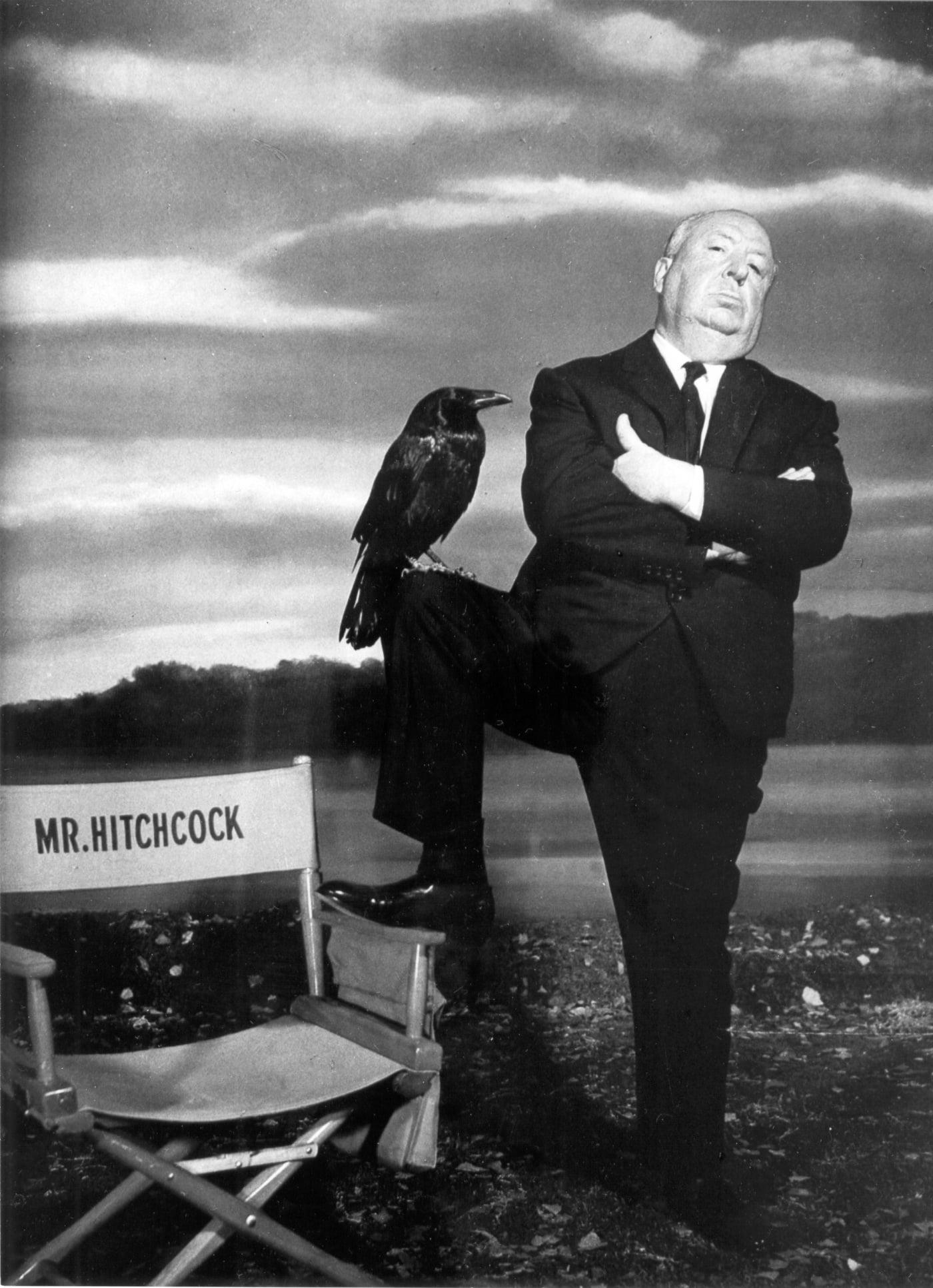
    Bernard Herrmann began his film career right at the top, with “Citizen Kane” in 1941. He is perhaps best recognized for his scores for the films of Alfred Hitchcock, many of which have gone on to become classics, including those for “Vertigo,” “North by Northwest,” and especially “Psycho.”

    Less well known is his work on the television series “The Alfred Hitchcock Hour,” which ran from 1963 to 1965. Herrmann composed music for 17 of the episodes. He was also responsible for suggesting Hitchcock’s signature tune, Charles Gounod’s “Funeral March of a Marionette,” which appears throughout the series in Herrmann’s own arrangement.

    Jerome Moross, Herrmann’s friend since childhood, had also enjoyed his share of success on the silver screen. Moross is best-remembered for having written the score for “The Big Country.” Nobody wrote western music quite like Moross. So it’s hardly surprising he would be asked to contribute to twelve episodes of “Wagon Train.”

    When someone noticed that the “Wagon Train” theme bore a striking resemblance to some of Moross’ music written for the film “The Jayhawkers,” two competing studios were kind enough to look the other way.

    Unlike Moross and Herrmann, who were both well-known by the time they ventured into television, John Williams was still very much on his way up. Williams, then billed as “Johnny,” was active in the movies throughout the 1960s, but his film projects at the beginning were mostly undistinguished, with titles like “Daddy-O,” “Gidget Goes to Rome,” and “John Goldfarb, Please Come Home.”

    Of course, he worked as a musician on more reputable projects, appearing as pianist on the soundtracks of “The Big Country,” “To Kill a Mockingbird” and “Charade.” He also worked as an orchestrator on “The Guns of Navarone.”

    But what provided much of Williams’ bread-and-butter throughout the ‘60s was his work on television series like “Checkmate,” “Gilligan’s Island,” and – for our purposes this week – “Lost in Space.” Happily, that “Williams sound,” so beloved by fans of “Stars Wars,” “Raiders of the Lost Ark,” and “E.T.,” was already in place.

    Finally, Jerry Goldsmith may have been a little bit ahead of Williams in the ‘60s, in terms of being offered more substantial films, but he too worked in television, providing scores for “Have Gun, Will Travel,” “The Twilight Zone,” and “Dr. Kildare.” We’ll conclude the hour with a medley of familiar Goldsmith television themes, with the composer conducting the London Symphony Orchestra.

    You’re invited to think inside the box, as film composers write for television this week, on “Picture Perfect,” this Saturday evening at 6:00 EST, on WWFM – The Classical Network and wwfm.org.

  • Klaatu’s Tough Love Earth’s Fate Sci-Fi

    Klaatu’s Tough Love Earth’s Fate Sci-Fi

    Klaatu, the friendly alien of “The Day the Earth Stood Still” (1951), may come in peace, but his is a message delivered with tough love: if humankind refuses to transcend its aggressive impulses and cooperate, the Earth will be eliminated.

    Think of it as kind of a sanity-or-else Election Week special.

    Roy Bjellquist and I will discuss this Washington D.C.-based, sci-fi milestone – with an outstanding score by Bernard Herrmann – on the next Roy’s Tie-Dye Sci-Fi Corner. As always, we’ll also be watching for your comments and insights during the Facebook livestream, this Sunday night at 7:00 EST.

    https://www.facebook.com/roystiedyescificorner/

    KLAATU BARADA NIKTO!

  • Lost Worlds Fantastic Film Scores on Picture Perfect

    Lost Worlds Fantastic Film Scores on Picture Perfect

    This week on “Picture Perfect,” prepare to get “lost!” It’s an hour of music from fantasy films set in lost worlds.

    In “King Kong” (1933), filmmaker and entrepreneur Carl Denham hires a ship to an uncharted island, known only from a secret map in his possession. There the crew discovers the titular gorilla and other outsized, should-be-extinct creatures. Kong is abducted from his natural habitat – and you know the rest. The composer, Max Steiner, pulls out all the stops. “Kong” was one of the first films to demonstrate how truly powerful an orchestral soundtrack could be.

    Then we travel to the earth’s core, courtesy of Jules Verne and “Journey to the Center of the Earth” (1959). James Mason is the professor who leads the expedition. The film sports one of Bernard Herrmann’s most outlandish soundscapes, the orchestra consisting of winds, brass and percussion, but also cathedral organ, four electric organs, and an obsolete Renaissance instrument called the serpent. Watch out for that giant chameleon!

    “One Million Years B.C.” (1966) is a guilty pleasure if ever there was one. Produced by Hammer, the studio that gave us all those repugnant yet somehow delicious Peter Cushing-Christopher Lee horror team-ups, the film features special effects by the legendary Ray Harryhausen and an equally legendary fur bikini, sported by Raquel Welch. The music is by Mario Nascimbene, who wrote one of my favorite scores for Kirk Douglas, for “The Vikings.” We’ll be listening to the film’s climactic volcano sequence.

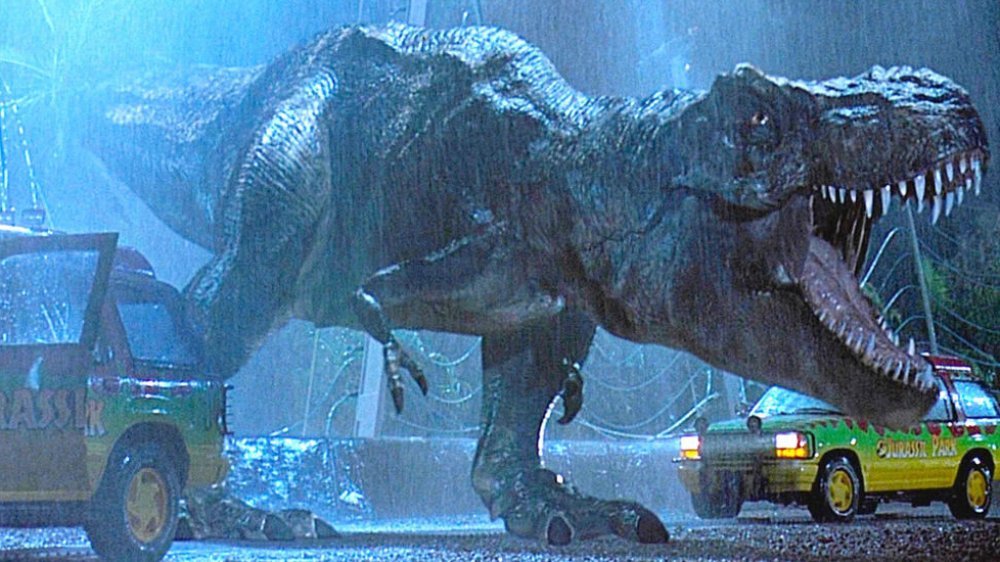
    As he did with the Indiana Jones films, director Steven Spielberg turned to B-movie source material as his visual inspiration for “Jurassic Park” (1993), based on the novel by Michael Crichton. The herky-jerky dinosaur effects of yore are replaced by state-of-the-art computer-generated imagery, in this story of a remote island safari park gone wrong.

    Sure, we’ve come a long way from Raquel Welch being carried off by a Pteranodon, but admit it, we all still want to see people fight dinosaurs. Instead of fudging history, now we can feel superior by fudging science. “Jurassic Park” plays on modern scientific thinking, with DNA extracted from mosquitoes trapped in amber, cloning, and the theory that dinosaurs were not lizards, after all, but rather birds. The music is by long-time Spielberg collaborator, John Williams.

    If you happen to forget a compass, don’t panic! In the words of Ian Malcolm, life finds a way. Join me for “Lands That Time Forgot,” on “Picture Perfect,” now at its new time, this SATURDAY EVENING AT 6:00 EDT, on WWFM – The Classical Network and wwm.org.

Tag Cloud

Aaron Copland (92) Beethoven (95) Composer (114) Film Music (123) Film Score (143) Film Scores (255) Halloween (94) John Williams (187) KWAX (229) Leonard Bernstein (101) Marlboro Music Festival (125) Movie Music (138) Opera (202) Philadelphia Orchestra (89) Picture Perfect (174) Princeton Symphony Orchestra (106) Radio (87) Ralph Vaughan Williams (85) Ross Amico (244) Roy's Tie-Dye Sci-Fi Corner (290) The Classical Network (101) The Lost Chord (268) Vaughan Williams (103) WPRB (396) WWFM (881)

DON’T MISS A BEAT

Receive a weekly digest every Sunday at noon by signing up here


RECENT POSTS