Opera. Cabaret. Motown. Baroque. Ballet. Bluegrass… no, STRADGRASS. And ABBA?
Beginning this weekend, it will be another tuneful June for the Princeton Symphony Orchestra and friends, as The Princeton Festival gets underway at Morven Museum & Garden, June 6 to 21. For the most part, concerts will take place within a state-of-the-art performance pavilion on the Morven grounds, at 55 Stockton St. (Rte. 206), with a few to be held, as noted, across the way at Trinity Church.
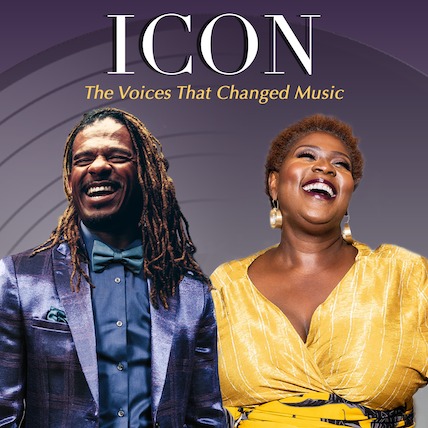
The festival will open on Friday with “ICON: The Voices that Changed Music.” Capathia Jenkins and Ryan Shaw return to the festival stage to celebrate the artistry of Michael Jackson, Prince, Whitney Houston, Gladys Knight, Elvis Presley, Diana Ross, Stevie Wonder, and others, covering songs that helped shape popular culture and define a nation. (Friday, June 6, at 7 p.m.)
Operatic superstar Renée Fleming will appear on Saturday, to perform works by Handel, Puccini, Reynaldo Hahn, and others, including selections from American musical theater. Seating is already at capacity, but feel free to add your name to the waiting list. (Saturday, June 7, at 8 p.m.)
If musical theater is your bag, you’ll also likely be interested in “Sondheim in the City,” presented cabaret-style by Melissa Errico. Errico’s Broadway credits are too many to list. She was nominated for a Tony Award for Outstanding Lead Actress for Michel Legrand’s “Amour” and for a Drama Desk Award for her performance in Sondheim’s “Passion.” She and Sondheim have been very good to one another. Her 2018 album “Sondheim Sublime” was acclaimed by Terry Teachout of The Wall Street Journal as “the best all-Sondheim album ever recorded.” (Sunday, June 8, at 4 p.m.)
Kentucky-born, classically-trained Tessa Lark has basically forged her own genre: Stradgrass. A veteran of her father’s gospel bluegrass band, Lark went on to study at New England Conservatory and Juilliard. Her program will meld violin music by Telemann, Bach, and Ysaÿe with Appalachian and bluegrass licks. (Thursday, June 12, 7 p.m.) The concert will be held at TRINITY CHURCH, a stone’s throw from Morven at 33 Mercer Street.
Of course, opera has always been the centerpiece of the festival. This year’s offering will be Puccini’s “Tosca.” Sardou’s original play (a vehicle for Sarah Bernhardt) is the very definition of over-the-top, but the composer really sells it with some of his most ardent, romantic music. Take the plunge from Castel Sant’Angelo. (Friday, June 13, at 7 p.m., Sunday, June 15 at 4 p.m., or Tuesday, June 17, at 7 p.m.)
To get you in the mood, members of Opera Delaware will join Rochelle Ellis and “Tosca” soprano Tonie Marie Palmertree for a free “opera bootcamp” at Morven’s Stockton Education Center. (Tuesday June 10, 3-8 p.m.) Registration is required.
A few days later, prior to the second performance, a talk, “Exploring Tosca,” will be given by Margaret Cusack and Eve Summer, also at the Stockton Education Center. (June 15 at 2:15 p.m.)
Dance will also be represented as American Repertory Ballet presents “An Evening of Pas de deux” with members of the PSO, conducted by music director Rossen Milanov. Included will be selections from Tchaikovsky’s “Swan Lake” and Minkus’ “Don Quixote,” alongside Ethan Stiefel’s “Delibes Duet.” (Saturday, June 14, at 7 p.m.)
Festival favorites, the ensemble The Sebastians, will return, to perform an alliterative program, “Baroque Brilliance,” which will include works by Handel, Telemann, and an assortment of Italian composers whose names end in “i.” (Wednesday, June 18, at 3 p.m. & 7 p.m.) AT TRINITY CHURCH
Back to the Morven pavilion, Masters of Soul will appear in a Motown revue, featuring favorites by Gladys Knight & The Pips, Marvin Gaye & Tammi Terrell, Smokey Robinson & The Miracles, The Temptations, The Four Tops, Diana Ross & The Supremes, Martha Reeves and The Vandellas, Barry White, Sam & Dave, James Brown, and others. (Thursday, June 19, at 7 p.m.)
The concert will cap a Juneteenth celebration that will also include a flag-raising event (1 p.m. at the Municipality of Princeton) and a talk by Rochelle Ellis about Motown’s influence on the Civil Rights Movement (4 p.m. at Morven’s Stockton Education Center).
The Italian Baroque will loom large when violinist Daniel Rowland and cellist Maja Bogdanović join members of the Princeton Symphony Orchestra for “Viva Vivaldi.” But to spice it up a little, the program will also include Osvaldo Golijov’s “Tenebrae” for string orchestra and Max Richter’s “Vivaldi’s Four Seasons Recomposed.” (Friday, June 20, 7 p.m.)
The festival will conclude with a harmonic smorgasbord. Mamma mia! It’s “ARRIVAL from Sweden: The Music of ABBA!” What else do you really need to know? (Saturday, June 21, at 7 p.m.)
Perhaps of added interest, for the first time, same-day $20 “Young at Art” rush tickets will be offered for 18-to-30 year-olds for many (but not all) of the performances. The EXCEPTIONS are June 7 (Renée Fleming), June 14 (Evening of Pas de deux), and June 21 (ARRIVAL from Sweden: The Music of ABBA). Proof of age with a government-issued ID is required.
For those purchasing tickets in advance, boxed picnic lunches from Jammin’ Crepes may be reserved with 48-hours’ notice. These will be available for pick-up from the Jammin’ Crepes booth on Morven’s back lawn one-hour before showtime.
In addition, the festival will be offering a Community Day, free and open to the public. (Sunday, June 8, from 9 am.-3:30 p.m.) Yoga in the Garden will return (movement accompanied by live music), from 9-10 a.m. (registration required). That will be followed by a Festival Farmers’ Market (offering local produce and artisanal products to the strains of an historic band organ), from 10 a.m.-1 p.m. The afternoon will be alive with kid-friendly fun and magic (including musical activities, a student art exhibit, a balloon-a-thon, and yes, a magician), from 12-3:30 p.m.
For more information about concerts, concessions, and more, visit the Princeton Festival website at https://princetonsymphony.org/festival.
If you’re really rarin’ to go, an artists’ roundtable with members of the cast and crew of “Tosca,” including conductor Rossen Milanov and stage director Eve Summer, will be held at Princeton Public Library tonight at 7:00. The event is free and open to the public.
OPENING WEEKEND (clockwise from left): Capathia Jenkins and Ryan Shaw; Renée Fleming; the performance pavilion at Morven; and Melissa Errico