This week on “The Lost Chord,” nothing attracts samurai and radiation-induced thunder-lizards like cherry blossoms.
We’ll enjoy concert music by two Japanese composers – both close friends – best recognized for their work in film. Akira Ifukube studied with Alexander Tcherepnin. Though his “Japanese Rhapsody” of 1935 won first prize in an international contest judged by Albert Roussel, Jacques Ibert, and Arthur Honegger, among others, financial considerations led him to write 250 film scores. Undoubtedly, he is best known for his music for Godzilla.
Humiwo Hayasaka was Akira Kurosawa’s composer of choice, writing music for classic films such as “Rashomon” and “Seven Samurai.” He wrote over 100 film scores in all, before his early death from tuberculosis at the age of 41. Prominent Japanese composer Toru Takemitsu (who later scored Kurosawa’s “Dodes’kaden”) claimed Hayasaka as a formative influence. We’ll hear Hayasaka’s Piano Concerto, composed in 1948. The first movement is a massive elegy for the composer’s brother and all the dead of the Second World War; and the second, a contrasting movement of conspicuous playfulness.
Incidentally, Ifukube was also responsible for creating Godzilla’s trademark roar, which was produced by running a resin-covered leather glove along the loosened strings of a double bass. Experience this distinctive call as a sort of intermezzo, between works by the composer of “Godzilla” and that of “Seven Samurai” on “The Lost Chord,” now in syndication on KWAX Classical Oregon!
——–
Clip and save the start times for all three of my recorded shows:
PICTURE PERFECT, the movie music show – Friday at 8:00 PM EDT/5:00 PM PDT
SWEETNESS AND LIGHT, the light music program – Saturday at 11:00 AM EDT/8:00 AM PDT
THE LOST CHORD, unusual and neglected rep – Saturday at 7:00 PM EDT/4:00 PM PDT
Stream them, wherever you are, at the link!
https://kwax.uoregon.edu
Category: Daily Dispatch
-

Japanese Composers in Bloom on “The Lost Chord”
-
April in Paris on “Sweetness and Light”
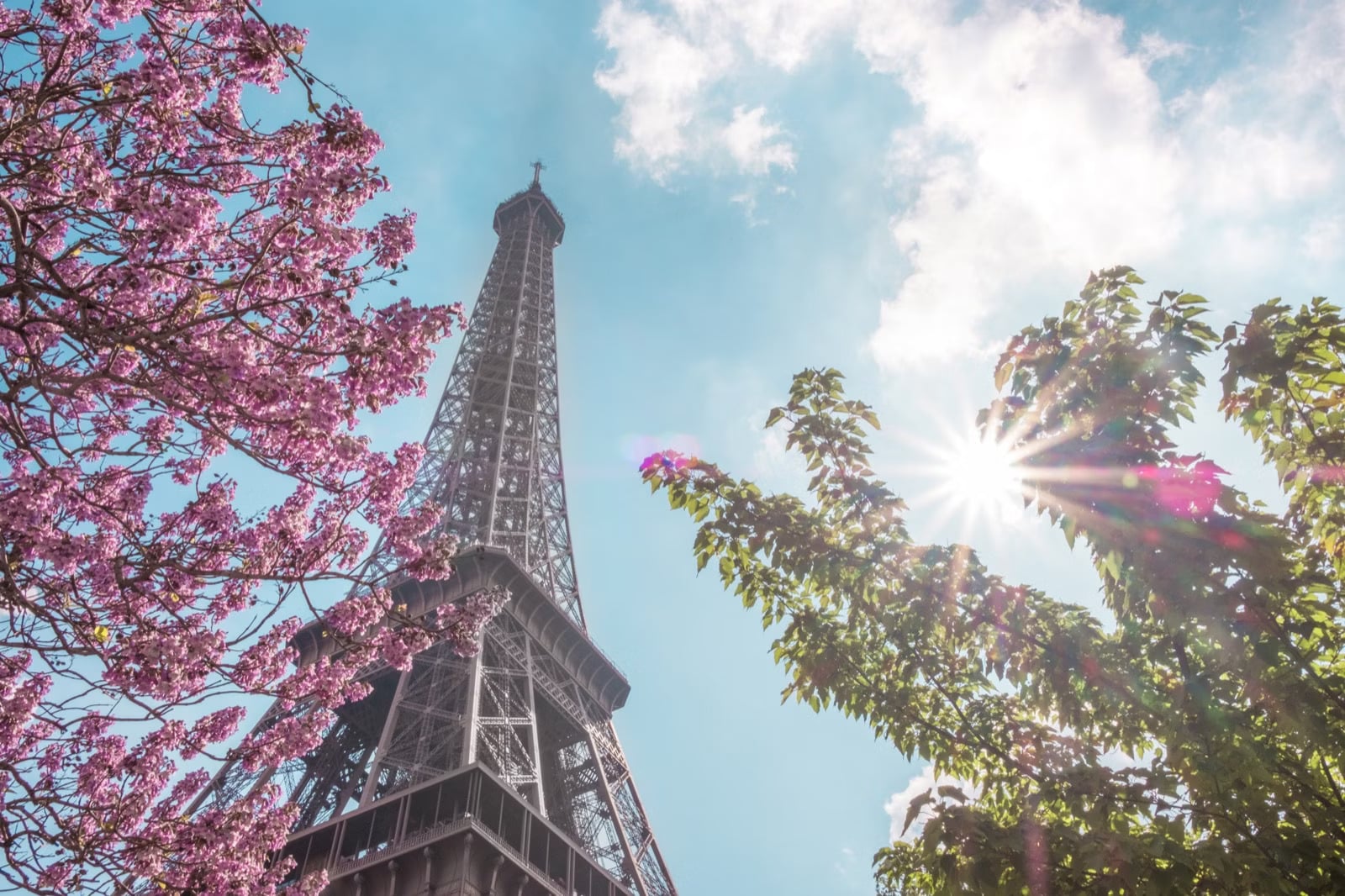
This Saturday morning on “Sweetness and Light,” it’s April in Paris.
We’ll hear April-and-Paris themed songs by Charles Trenet (“En avril, à Paris”), Georges Bizet (“Chanson d’avril”) and, of course, Vernon Duke (“April in Paris”), alongside a symphony for wind instruments by Charles Gounod (first performed in Paris in April 1885), a love song by Erik Satie, a suite (“Paris”) by British light music master Haydn Wood, and a work by Darius Milhaud as good as spring itself.
It will be an hour of cafés and croissants, blossoms and bisous, on “Sweetness and Light,” this Saturday morning at 11:00 EDT/8:00 PST, exclusively on KWAX Classical Oregon!
Stream it, wherever you are, at the link:
https://kwax.uoregon.edu/ -
Poetry in Motion on “Picture Perfect”
Time to sharpen your quill and replenish your laudanum. April is National Poetry Month. This week on “Picture Perfect,” the focus will be on poets at the movies.
We’ll hear music from “Dead Poets Society” (1989), Peter Weir’s beautiful-but-vacuous take on the transformative power of poetry, its “Goodbye, Mr. Chips” story arc made all the more poignant (and less cheap) by the passing of its beloved star, Robin Williams. Maurice Jarre, a long, long way from his Oscar-winning work on “Lawrence of Arabia,” wrote the music, which blends dulcimer and bagpipes (!) with electronics.
At least “Dead Poets Society” found a place in the hearts of the public. “Lady Caroline Lamb” (1973) did not. Sarah Miles plays Byron’s jilted lover, the wife of future prime minister William Lamb. Despite an impressive cast, which includes Jon Finch, Laurence Olivier, Ralph Richardson, and Richard Chamberlain (as Lord Byron, no less), and direction by venerable playwright and screenwriter Robert Bolt (“A Man for All Seasons”), the film received mixed reviews and tanked at the box office. The always fine Richard Rodney Bennett provided the atmospheric score.
“Il Postino” (1994) tells the story of a simple postman whose prosaic life is transformed through the power of metaphor. His model is the exiled Chilean poet Pablo Neruda, played by Philippe Noiret. The film’s writer and star, Massimo Troisi, died of a heart attack twelve hours after shooting was completed, having postponed surgery until he finished work. He was 41 years-old. Argentinian-Italian composer Luis Bacalov’s bandoneon-tinged score was honored with an Academy Award for Best Music.
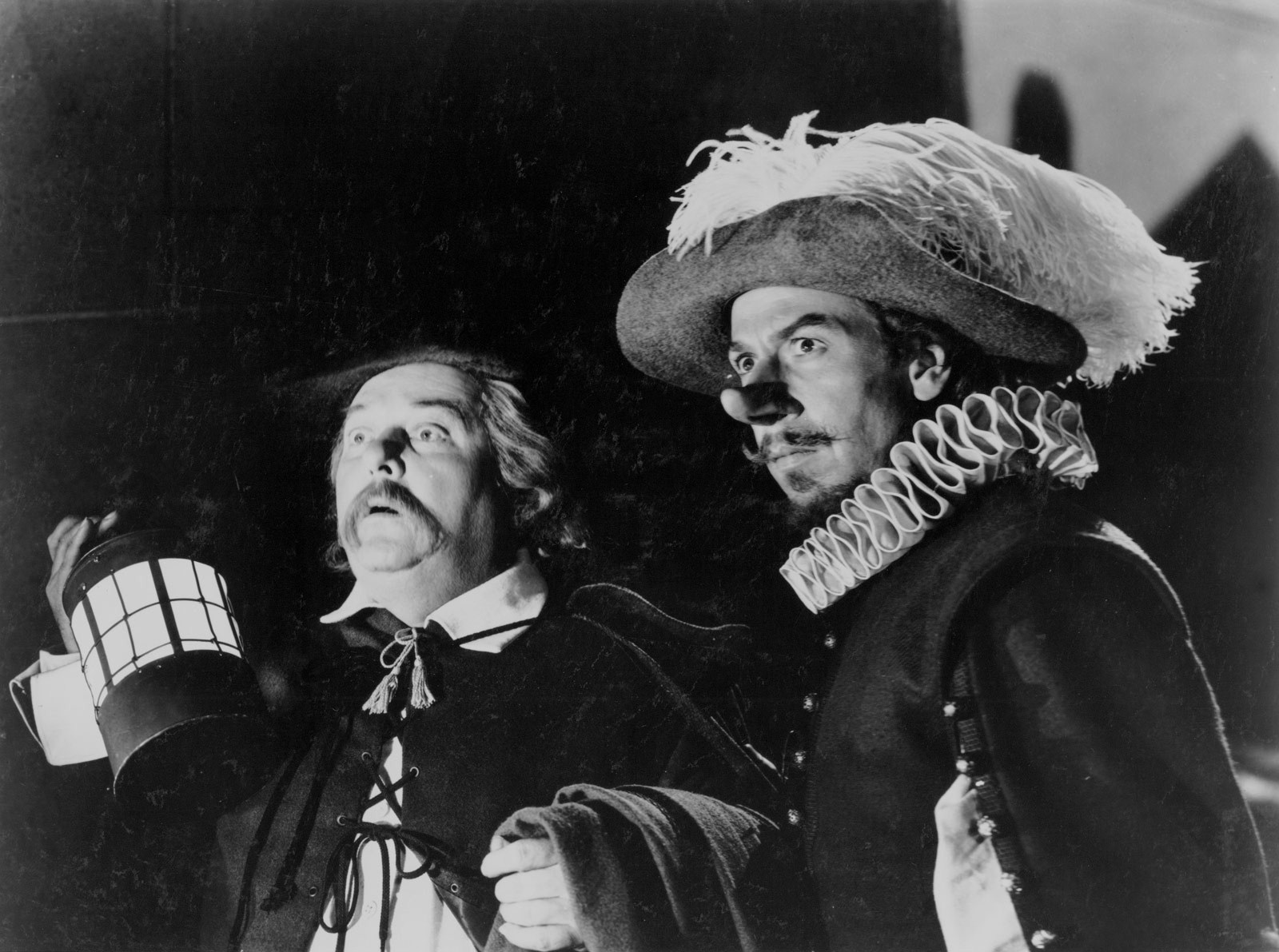
Finally, we put a point on things with the rapier wit of “Cyrano de Bergerac” (1950). José Ferrer struts his stuff as the warrior-poet with the prominent proboscis, who never wants for words, save in the presence of his beautiful cousin Roxane. Ferrer elocuted – and fenced – his way to an Academy Award for Best Actor. The score is one of Dimitri Tiomkin’s finest, and we’ll hear a recording taken from the film’s original elements, under the crisp direction of the composer.
It could be verse. Poetry warms the soul this week. It’s poetry in motion, on “Picture Perfect,” music for the movies, now in syndication on KWAX Classical Oregon!
——–
Clip and save the start times for all three of my recorded shows:
PICTURE PERFECT, the movie music show – Friday at 8:00 PM EDT/5:00 PM PDT
SWEETNESS AND LIGHT, the light music program – Saturday at 11:00 AM EDT/8:00 AM PDT
THE LOST CHORD, unusual and neglected rep – Saturday at 7:00 PM EDT/4:00 PM PDT
Stream them, wherever you are, at the link!
https://kwax.uoregon.edu -
Paul Robeson’s Dream of Universal Brotherhood
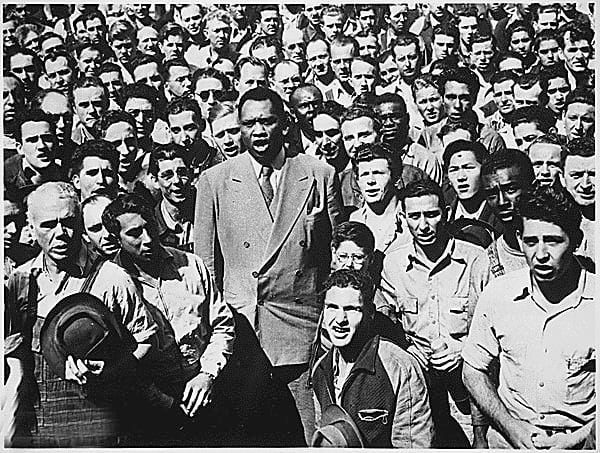
On Paul Robeson’s birthday, here’s Princeton’s own, to sing Beethoven’s celebration of universal brotherhood, his setting of Schiller’s “Ode to Joy.”
At the time of this recording, his U.S. passport had been revoked.
https://www.peoplescollection.wales/items/24367
More about Robeson’s ties to Wales and the plight of the miners:
https://www.theguardian.com/books/2017/jul/02/how-paul-robeson-found-political-voice-in-welsh-valleys
Robeson in “The Proud Valley” (1940)
The story behind “Freedom Train,” with audio:
https://njdigitalhighway.org/lesson/paul_robeson/freedom_train
Paul Robeson’s dream of universal brotherhood was a lifelong commitment to the idea that all human beings, regardless of race, nationality, or economic standing, are interconnected and deserving of dignity, equality, and peace – concepts still unfortunately radical in 2026.
The man certainly walked the walk. Happy birthday, Paul Robeson. -

Eight-Legged Approval for Mahler 8th
I was listening to a recording of Jascha Horenstein conducting Mahler’s Symphony No. 8 on Henry Fogel’s “Collectors’ Corner” last night on KWAX. Frequently identified as the “Symphony of a Thousand,” this is Mahler’s grandest statement, as if he took the choral finale of Beethoven’s Ninth Symphony, dialed it up to 11, and stretched it more or less to 90 minutes. It is hair-raisingly thrilling.
“Try to imagine the whole universe beginning to ring and resound,” Mahler wrote, in his characteristically overheated way. “There are no longer human voices, but planets and suns revolving.”
All the same, a man needs his sleep, and 11:00 (EDT) is already past my bedtime, especially if I want to do some reading. So I rose from my chair to turn out the lights and shut off my internet radio, when what did I notice on one of the speakers, but a spider with its legs splayed, unmistakably riding the grandiose waves of the music.
I couldn’t take that away from him. So I went back and sat down until the end of the first movement (about 25 minutes in duration).
I was reminded of Helen Keller, deaf and blind since she was a toddler, who experienced the thrill of Beethoven’s 9th purely through the vibrations of her radio speaker.
I waited until the end of the first movement to turn off the radio. I figured I’d allow the little guy his moment of ecstasy.
I’m not sure what I believe, exactly, but if I’m ever reincarnated, I hope someone will do as much for me.
Here’s a post I wrote about Keller in 2020.
https://rossamico.com/2020/12/31/beethovens-ninth-joy-freedom-2020/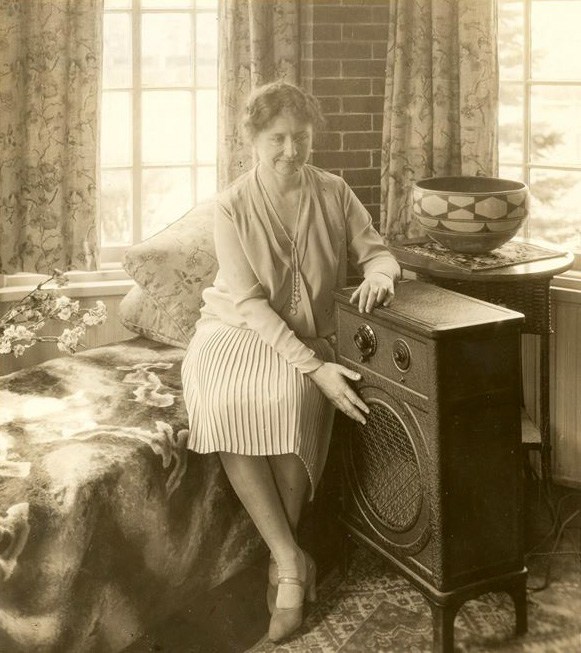
Tag Cloud
Aaron Copland (94) Beethoven (95) Composer (114) Film Music (149) Film Score (143) Film Scores (255) Halloween (98) John Williams (197) KWAX (232) Leonard Bernstein (105) Marlboro Music Festival (125) Movie Music (164) Mozart (91) Opera (215) Philadelphia Orchestra (90) Picture Perfect (174) Princeton Symphony Orchestra (110) Radio (90) Ross Amico (244) Roy's Tie-Dye Sci-Fi Corner (290) The Classical Network (101) The Lost Chord (269) Vaughan Williams (107) WPRB (397) WWFM (881)