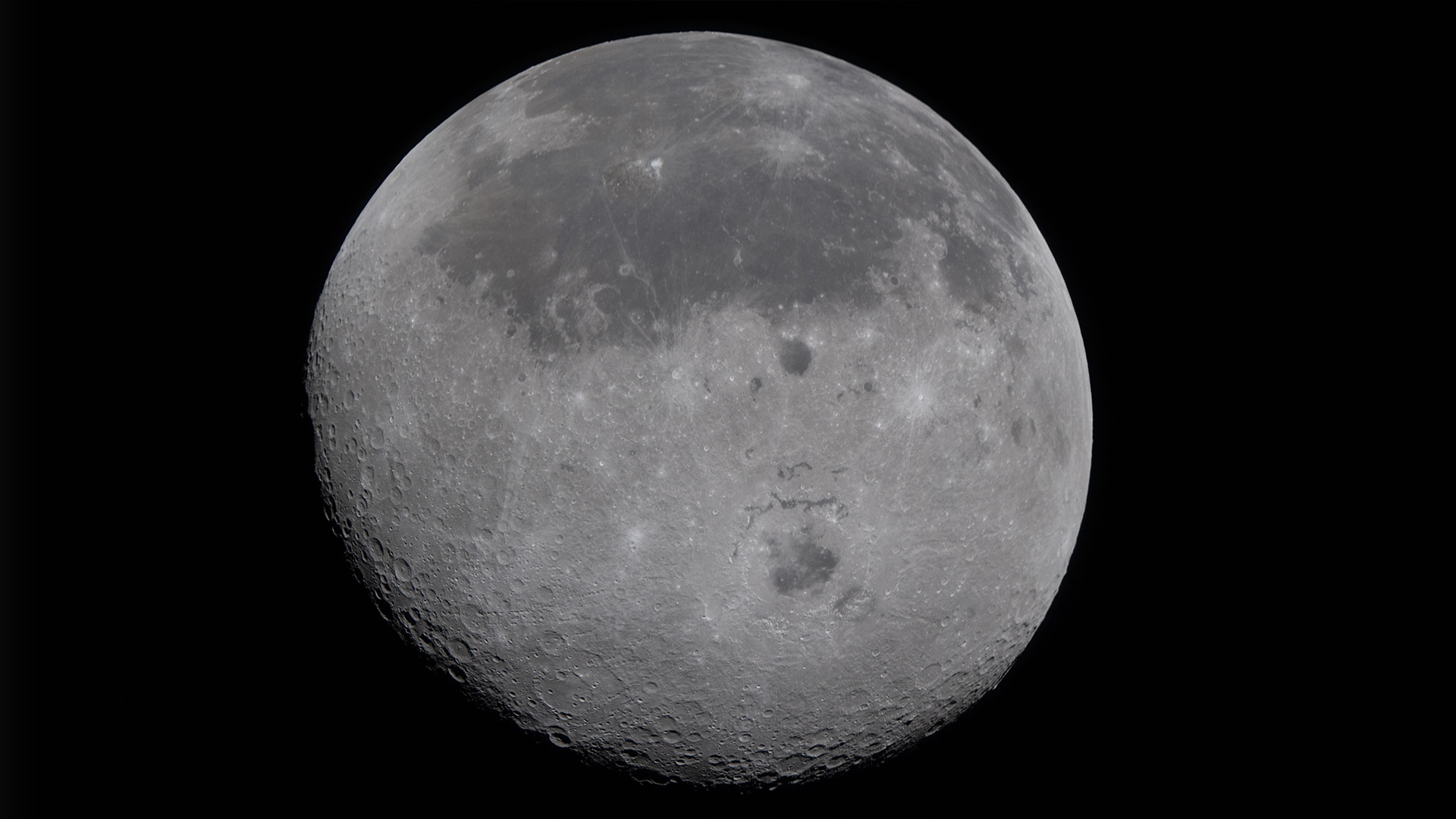
I received this private message from Pete Foltz this morning (which I am sharing with his permission):
“Ok – the best soundtrack for circling the moon? Entrance of the Gods into Valhalla? Or Pink Floyd?”
Anyone?
Astronauts have taken a lot of music to space over the years. Here’s a post I wrote about Rusty Schweickart, who took Vaughan Williams and Alan Hovhaness, before it was cool, on Apollo 9.
https://www.facebook.com/classicrossamico/posts/pfbid0zHUr5KgGEPdnJ5H7ABpitYA3wcTNiaG3qf7dBXRSjBieKmGb583kaVuzbAjt4HVPl
What composers or pieces of music would be on your mixtape? Rusty’s sounds pretty good to me.
Category: Daily Dispatch
-
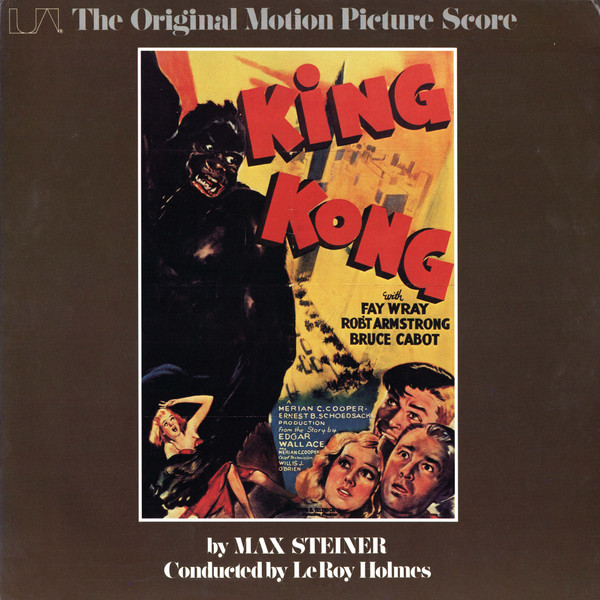
LeRoy Holmes: The Man Who Killed Kong
Anybody else remember LeRoy Holmes?
Before the internet and when CDs were still in their comparative infancy, I was still snapping up whatever LPs I could find of classic film scores. The Charles Gerhardt series with the National Philharmonic Orchestra, of course, was the gold standard. I also collected all of Bernard Herrmann’s recordings of his own music. Beyond that, it was mostly whatever original soundtrack albums I could lay my hands on: “The Ten Commandments,” “Ben-Hur,” “The Alamo,” “The Thief of Bagdad” (a rare find from “Elmer Bernstein’s Film Music Collection”).
During this period, while browsing the record bins in the back of The Book Trader in Philadelphia (at its old location at 5th & South), I stumbled across a series of recordings issued by United Artists featuring classic film scores with LeRoy Holmes conducting. It’s possible these were inspired by the unexpected success of the Gerhardt series.Sadly, they in no way match Gerhardt’s exuberance and vitality. In fact, the performances were downright depressing. Threadbare orchestras in boxy acoustics sounding like they were captured on the first run-through. The orchestra for “Kong” was so insufficient that the percussion in the opening credits put me in the mind of those Meco covers of “Star Wars” and other popular ‘70s scores, reimagined as disco hits. (Yes, this was a thing.)
I don’t know what the deal was with the United Artist records. I do know that within a moment of the stylus touching the groove my heart sank. I had picked up several of these – I remember another one was Alfred Newman’s “The Prisoner of Zenda” – and they were all equally terrible. I hurried back to the store with them at my soonest possible convenience.
When I described the problem, the clerk didn’t want to take them back, denying responsibility for the quality of the actual recordings. But my vehemence must have been such that he was persuaded to put one of them on in the store. Right away, his face screwed up as if he were sucking on lemons. “Yeah, I see what you mean,” he said. “I wouldn’t want them either.” He walked over to the cash box and refunded my money.
These came bubbling back up into my consciousness like studiously repressed nightmares when discussing “Kong” recordings with a friend recently, who’d acquired the superior Fred Steiner recording (no relation to Max) on vinyl the last time we visited Princeton Record Exchange.
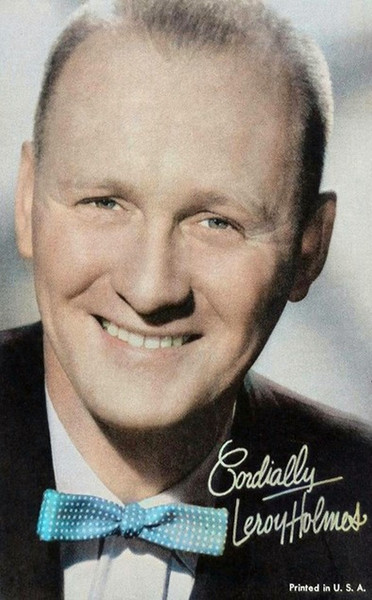
Now, with the internet at my disposal, I was able to look into LeRoy Holmes. And what do you know, he was no hack. Yeah, from his album listings and unfortunate record covers, it looks like he did a lot of easy listening and middle-brow arrangements of movie themes. But he was a Juilliard graduate, who also studied privately with Ernst Toch.
He learned his craft, then wrote, arranged, and/or conducted for Harry James, Judy Garland, Dinah Shore, and Nelson Eddy. For a time, he was house arranger and conductor at M-G-M. He composed and performed for Ernie Kovacs, for Kovacs’ own show and his appearances on “The Tonight Show.” He backed Connie Francis and Shirley Bassey. His recording of Dimitri Tiomkin’s theme for “The High and the Mighty” became a big hit. He also enjoyed success with his covers of Ennio Morricone spaghetti westerns. (Who didn’t?)
Obviously, he had the chops. Holmes scored films and recorded for United Artists and Everest Records. Why these classic film score records are so, so bad is a mystery I don’t mind recalling for a Facebook post, but do not wish to dwell on.
——–
Holmes’ hit record of “The High and the Mighty”
https://www.youtube.com/watch?v=-zLcFc0IXUQ
Monstrous “Kong”
https://www.youtube.com/watch?v=e7RjCp2dmpU&t=1s
Meco’s “Star Wars”
https://www.youtube.com/watch?v=a3w6j-jOOXU
Provocative LeRoy Holmes
https://www.youtube.com/watch?v=bpwLXkFWJOs -
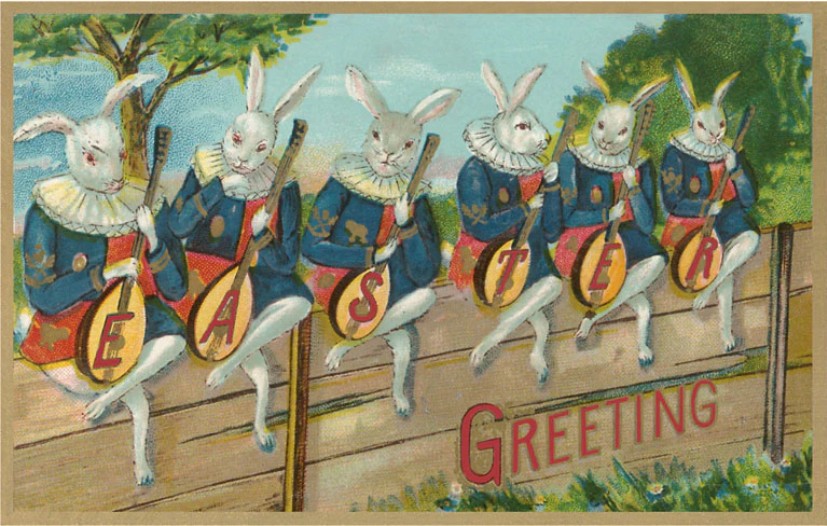
Happy Easter!
Yes, there is Easter music for lute…
https://www.youtube.com/watch?v=pc-IlZ_UjIA
Though I much prefer this, by Vaughan Williams, always an essential start to my holiday.
https://www.youtube.com/watch?v=QKGLvRPe_V0
Enjoy your egg hunts, everyone! -
“Rood Awakening” on “The Lost Chord”
This week on “The Lost Chord,” it’s a Howard Ferguson Easter.
Born in Belfast in 1908, Ferguson had ambitions to become a composer. To this end, he traveled to London, where he studied at the Royal College of Music with, among others, Ralph Vaughan Williams. He also met and befriended fellow student Gerald Finzi. He achieved early success with works like the Octet of 1933, and no less a personage than Jascha Heifetz recorded his Violin Sonata No. 1.
Even so, over the decades his music has slipped from consciousness, no doubt helped by the fact that, by mid-life, he felt he had already said everything he had to say as a composer. He devoted his last four decades to musicological pursuits, editing and promoting works of Purcell, Schubert, and Finzi. In the 1990s, he also wrote a cookbook, “Cooking Solo.” Ferguson died in 1999, not long after his 91st birthday.
Thankfully, he lived long enough to hear some fine recordings as part of a modest revival of his music in the 1980s and ‘90s. A number of his chamber works were released on the Hyperion label by fine musicians like Thea King and members of the Nash Ensemble; his Piano Concerto was recorded for EMI by Howard Shelley; and Richard Hickox conducted a disc of his orchestral works for Chandos.
Also on the latter album is what turned out to be Ferguson’s last completed work, “The Dream of the Rood,” for chorus and orchestra, composed in 1958. After that, the composer embarked on a string quartet, but became frustrated by the lack of a fresh perspective and tore the thing up.
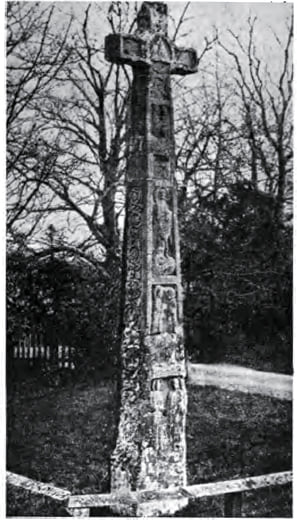
“The Dream of the Rood” is based on an 8th century Anglo-Saxon poem that marries the Passion story with characteristics of the secular heroic tradition. The poem is framed by a narrator’s vision of a magnificent bejeweled tree. Upon closer inspection, however, he finds its jewels bespattered with blood. It becomes apparent that this tree is the very same upon which Christ was crucified.
The middle portion of the poem is told from the tree’s perspective, with the tree being cut down and carried away for the purpose of the Crucifixion. The nails pierce the tree, yet man and tree endure, refusing to fall, bearing unimaginable pain for the sake of mankind. Just as Christ is resurrected, so is the Cross resurrected, now adorned with gold and silver. It is honored above all trees, just as Christ is honored above all men. The narrator gives praise to God, filled with hope at the prospect of eternal life and a desire to be nearer the glorious Cross.
I hope you’ll join me for music by Howard Ferguson (you’ll get to hear the Octet too), on “Rood Awakening,” on “The Lost Chord,” now in syndication on KWAX Classical Oregon!
——–
Clip and save the start times for all three of my recorded shows:
PICTURE PERFECT, the movie music show – Friday at 8:00 PM EDT/5:00 PM PDT
SWEETNESS AND LIGHT, the light music program – Saturday at 11:00 AM EDT/8:00 AM PDT
THE LOST CHORD, unusual and neglected rep – Saturday at 7:00 PM EDT/4:00 PM PDT
Stream them, wherever you are, at the link!
https://kwax.uoregon.edu
——–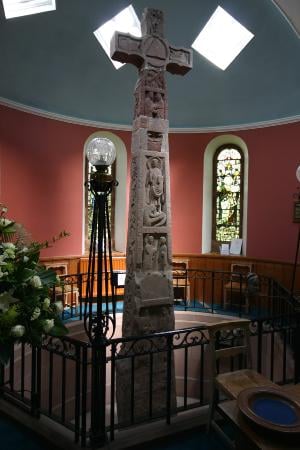
PHOTOS: Portions of the poem are engraved on the 8th century Ruthwell Cross (top, as it appeared between 1823 and 1887; and bottom, at its current location at Ruthwell Church, Dumfriesshire, Scotland) -

It’s a Light Music Easter Parade on “Sweetness and Light”
Bring down the hatboxes and polish up your shoes. It’s nearly time to take a stroll down the avenue!
I hope you’ll join me this morning on “Sweetness and Light” for a good old-fashioned Easter Parade. We’ll enjoy a veritable bouquet of graceful melodies, turned-out as boulevardiers, flirts, dandies, and dog walkers.
Gentlemen, tip your hats, and, ladies, model your bonnets, as we partake in a leisurely promenade on a lovely spring morning.
Start your day with a light music Easter Parade on “Sweetness and Light,” this Saturday morning at 11:00 EDT/8:00 PDT, exclusively on KWAX Classical Oregon!
Stream it, wherever you are, at the link:
https://kwax.uoregon.edu/
Tag Cloud
Aaron Copland (94) Beethoven (95) Composer (114) Film Music (149) Film Score (143) Film Scores (255) Halloween (98) John Williams (197) KWAX (232) Leonard Bernstein (105) Marlboro Music Festival (125) Movie Music (164) Mozart (91) Opera (215) Philadelphia Orchestra (90) Picture Perfect (174) Princeton Symphony Orchestra (110) Radio (90) Ross Amico (244) Roy's Tie-Dye Sci-Fi Corner (290) The Classical Network (101) The Lost Chord (269) Vaughan Williams (107) WPRB (397) WWFM (881)