Category: Daily Dispatch

  • Baroque Remixed: Handel, Brahms & More

    Baroque Remixed: Handel, Brahms & More

    Prior to the authenticity movement, musicians basically did whatever they wanted, employing works of the masters as so much grist for the mill. Bach and Handel were played by a hundred instruments, swooning portamenti applied, and trombones and bass drums added if it was felt the music required a good punch.

    Hamilton Harty’s arrangement of Handel’s “Water Music” was one of the saner applications, though it has come to sound somewhat strange to our ears today. At the other end of the scale was freewheeling Thomas Beecham, who was not at all bashful about lending cymbal crashes to “Messiah.”

    But you’ve got to remember, Sir Thomas was also crafting orchestral canapés and bonbons from Handel operas at a time when they were basically unknown outside of musicological circles.

    A sample of Beecham’s arrangements for the 1932 “Handel” ballet “The Origin of Design” will cap this morning’s “Sweetness and Light.” The climactic battle music is an amalgam of selections from Handel’s “Giulio Cesare,” “Rinaldo,” and “Ariodante” – and we’ll hear Beecham conduct it hell-for-leather!

    “The Origin of Design” was choreographed by Ninette de Valois, who also devised the scenario and choreography for Constant Lambert’s ballet “The Prospect Before Us (or, Pity the Poor Dancers).” Here, Lambert dips heavily into works of 18th century English composer William Boyce, whose eight delectable symphonies we still hear from time to time. Unsurprisingly, selections from some of these find their way into Lambert’s 1940 score, which he introduced with the Sadler’s Wells Ballet. Valois was inspired by a collection of drawings and prints by Thomas Rowlandson. (A reproduction of one is included with this post.)

    In between, we’ll admire the handiwork of a quite reputable, 19th century intermediary. It was no less than Johannes Brahms who lifted a portion of a harpsichord suite as the basis for his “Variations and Fugue on a Theme by Handel,” a piece conceived for solo piano in 1861. In 1938, English composer Edmund Rubbra orchestrated the work. We’ll hear it, given the luxury treatment, in a 1960 recording with Eugene Ormandy and the Philadelphia Orchestra.

    Yes, that’s right. Back in the day, the prevailing philosophy was “If It’s Baroque, Fix It.” 18th century inspirations will be polished up by 20th century hands on “Sweetness and Light,” this Saturday morning at 11:00 EDT/8:00 PDT, exclusively on KWAX, the radio station of the University of Oregon!

    Stream it wherever you are at the link:

    https://kwax.uoregon.edu/

  • Villa-Lobos’s Amazonian Hollywood Tale

    Villa-Lobos’s Amazonian Hollywood Tale

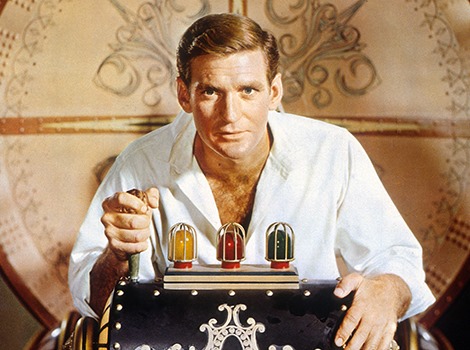
    When Heitor Villa-Lobos was contracted by M-G-M to write music for a big screen adaptation of W.H. Hudson’s novel “Green Mansions” (1959), expectations ran high on both sides. The Brazilian master began immediately, diving into the project with characteristic gusto. After all, he had been writing music inspired by the rain forest for his entire career.

    Unfortunately, he had very little affinity for the practicality of the filmmaking process, turning in musical impressions of scenes from the book. The studio was befuddled. Since Villa-Lobos was unable to adapt to the customary way of doing things, he was replaced by M-G-M house composer Branislau Kaper, who used the Villa-Lobos material as a springboard for his own dramatic conception. The result is part Villa-Lobos, part Kaper, and all M-G-M gloss.

    Villa-Lobos was a little embittered by his Hollywood experience. He promptly assembled a multi-movement symphonic poem, “Forest of the Amazon” (1958), some 75 minutes in length, which employed his rejected sketches. He made a recording of 45 minutes of the music in 1959, for which the soprano Bidu Sayão came out of retirement.

    This week on “Picture Perfect,” we’ll have selections from both versions of “Green Mansions,” as well as from the Mayan adventure “Kings of the Sun” (1963), composed by Elmer Bernstein, and “The Night of the Mayas” (1939), by Mexican composer Silvestre Revueltas.

    I hope you’ll join me for cinematic evocations of the indigenous peoples of Latin America, on “Picture Perfect,” music for the movies, now in syndication on KWAX, the radio station of the University of Oregon!


    Clip and save the start times for all three of my recorded shows:

    PICTURE PERFECT, the movie music show – Friday at 8:00 PM EDT/5:00 PM PDT

    SWEETNESS AND LIGHT, the light music program – Saturday at 11:00 AM EDT/8:00 AM PDT

    THE LOST CHORD, unusual and neglected rep – Saturday at 7:00 PM EDT/4:00 PM PDT

    Stream them, wherever you are, at the link!

    https://kwax.uoregon.edu/


    PHOTO: The project that left Villa-Lobos feeling green around the gills

  • Bard’s Fisher Center Lost Letter Mystery

    Bard’s Fisher Center Lost Letter Mystery

    As an amusing addendum to this year’s recently-concluded Bard Music Festival: last week, I shared a photo of myself, standing before a life-size poster of Bohuslav Martinů outside the Richard B. Fisher Center for the Performing Arts. It was only later that I revisited the image and noticed something a little peculiar. If you look down at the bottom of the photo, on the concrete at the base of the poster gallery is a perfectly visible letter “F.”

    This was on the first weekend of the festival. I determined to look for it when I returned for the second weekend, and can you believe it, THE “F” WAS STILL THERE! I picked it up and held it in my hand for a moment, considering whether or not I should have it mounted on a chain so that I could wear it around my neck gangsta-style. But the angel on my shoulder prevailed, and I turned it in at the Fisher Center Box Office.

    I wonder how long it lay there unmolested? The photo at the bottom right was posted by someone else in May. Clearly, at that time, the “F” was still mounted in its rightful place.

    What the “F?”

    Fisher Center at Bard

  • Bard Music Festival Martinů Deep Dive

    Bard Music Festival Martinů Deep Dive

    Another exhaustive – and exhausting – Bard Music Festival has come to end. In fact, so depleting can be this two-weekend gauntlet of marathon concerts, panels, and conversations – on top of the vagaries of travel, traffic, and simple bodily upkeep – that it can sometimes take me a good day or two to sufficiently recover. The trade-off can be a certain loss of fire in my reportage, but I hope not. I’ll do what I can here to stir the coals and recollect “Martinů and His World” in tranquility.

    I’m not sure where I found the energy (lack of time is a powerful incentive), but somehow, I managed to fire off my reactions to Friday and Saturday at white heat early on Sunday morning. These I posted in raw form until I could touch them up and smooth them out a little bit the next day. This allows me to narrow my focus to Sunday, the final day of the festival. I’ll start off by saying I didn’t sleep well on Saturday night, or didn’t sleep enough. I have this thing sometimes, where I just snap awake at 4:00. All the more remarkable, then, that I was able to make it through the day – and then drive home – with as much energy and focus as I did. But it wasn’t always easy.

    I’ve said it before, and I’ll say it again: Bard is not for the faint of heart. Certainly, anyone can attend a concert there and get real enjoyment from it and even walk away feeling as if they’ve experienced something special. But if you’re in for the full run of every concert, lecture, and panel, you’d better bring your Bard big-boy pants. Also, plan your meals and caffeine intake and do everything you can to get some good nights’ sleep.

    Sunday morning’s chamber music concert wound up being a bit more demanding than the standard Bard matinee. You have to understand, these concerts are planned by academics, often supporting specific theses, and once they’ve secured the resources and assembled the performers and have you in the hall, they’re going to pile it on as much as they can. So don’t go into it expecting a pedestrian concert experience. You’re not there for mindless pleasure. You won’t be offered a tray of koláče. Sure, a musical pastry might serve to break things up a bit. Certainly, it would be enjoyable to listen to. It might even cleanse the palate, so that you can reset and be in the right frame of mind to take in yet another unknown work by a mostly-forgotten composer writing in perhaps a similar, uningratiating style to the one that came before. But comfort was not the aim of Sunday morning’s concert.

    In recent years, Bard’s Sunday mornings have been full of delightful chansons and romances (“Berlioz and His World”) and English chamber music and British art song (“Vaughan Williams and His World”). With Bohuslav Martinů, there could very easily have been some Dvořák or some Copland that would have set easily on Sunday brunch.

    But the theme was “Martinů’s Legacy,” an impressive menu, admittedly, constructed with great care and scrupulous attention to detail; but I’m afraid with the dishes, served as they were, one piled on top of another, and then another, there was the danger of the inherent piquancy of any individual work being blunted by the next.

    The program opened with “Ten Bagatelles,” juvenilia compiled by Alexander Tcherepnin from his teen years, pieces which, if the truth be told, were not all that interesting. (He got better as an adult.)

    Then Iva Bittová sang Martinů’s “Four Songs on Czech Folk Poetry,” with child-like simplicity, in a voice you would not expect from a middle-aged woman (still uncannily youthful at 67). But Bittová was new to me. I didn’t realize that in her native Czechia she is a celebrated avant-gardist. It wasn’t until she took up her violin for one of her own settings that I was confronted with the full scope of her pixilating force, slipping off her shoes to pace the stage in a toe-ring and employing a variety of extended techniques, with unconventional blocking, foot-stomping, and primeval vocalizations. I found her a paradoxical blend of disarming and disturbing. She’s like a Czech Meredith Monk, though clearly her own, feral animal. I should have suspected what I was in for when she presented her accompanist in the Martinů with a sprig of purple loosestrife, as opposed to, say, roses, another child-like gesture.

    After Bittová, it was hard to downshift to Chou Wen-chung’s Suite for Harp and Woodwind Quintet, exquisitely imagined, delicately scored, with a kind of Chinese impressionism leavened with suggestions of folk music. You can tell when musicians (in this case, harpist Susan Drake and friends) feel they did a really good job, when at the end of a performance they’re all already smiling.

    Witold Lutoslawski’s “Dance Panels,” another folk-inflected piece, for clarinet and piano, is one of the few works on the program that turns up on recitals and radio from time to time. Alone, it makes an impression. Here, it was just another act in the vaudeville. (Still, well-played.)

    Frank Zappa’s “Ruth is Sleeping” was impressive for its embrace of some pretty serious atonality. Originally composed for synclavier, it was performed on Sunday in a transcription for piano four-hands. (The title refers to Ruth Underwood, a percussionist in Zappa’s band, The Mothers of Invention, who slept under her instrument.) At times, the work begins to suggest jazz improvisation. In any case, I’d be surprised if Ruth could sleep through it. Revisiting it on a recording, I like it a lot better now than I did on Sunday morning.

    That said, I found the 1933 “Etude” that followed it, by Jaroslav Ježek, more rock-and-roll, along the lines of Prokofiev in firebrand mode, though without the evident melodic gift.

    Joan Tower’s “Petroushskates,” for flute, clarinet, violin, cello, and piano, sprang from her enjoyment of figure skating and her admiration for Igor Stravinsky (especially the ballet “Petroushka”). The piece, which is most amusing at its start and finish (with an allusion to “The Rite of Spring”) was played with the composer in attendance. Tower has long served on the Bard faculty. If she had actually taken the stage, I might have gotten a worthwhile photo of her to share. But she didn’t, and that’s fine too.

    The program was brought to a close with Martinů’s Quartet for Oboe, Violin, Cello, and Piano. Interestingly, the first performance featured oboist Mitchell “Mitch” Miller, later of “Sing Along with Mitch” fame, and violinist William Kroll, who wrote the famous encore piece “Banjo and Fiddle.” At 12 minutes, it was not the briefest work on the program, but laboring against the cumulative effect of the others, it still went by agreeably and quickly.

    Lots of interesting material here, but again it risked being too much of a good thing. It played to intellectual curiosity more than visceral pleasure. There’s nothing wrong with that, as long as one comes into it with an open mind and an empty bladder. (Yet again, the concert, performed without intermission, ran long, and my morning cups of coffee were looking for the exit.)

    After a break for lunch (and more coffee), I headed over to the Richard B. Fisher Center for the Performing Arts’ Sosnoff Theater for the next challenge, probably the most highly-praised of Martinů’s 14 operas, “Julietta.”

    This one really snuck up on me. Walking in already battered after the morning concert and on about four-hours’ sleep, I felt harried and unamused for a good portion of the first act, with my eyes having to bounce back and forth between the rapid exchange of multi-lingual dialogue, sung and spoken by too many characters, to the English supertitles high above the stage. But by the end of the act, finally, there was some human connection, and things got much better from there.

    The opera is based on Georges Neveux’s 1927 play “Juliette ou la Clé des songes” (“Juliette, or the Key to Dreams”). Martinů himself crafted the libretto, first in French and then later Czech. It was given its first performance in Prague in 1938. I don’t know about the play, but the opera could be described as an absurdist psychological dramedy about the hunger for human connection. There aren’t any real stand-apart arias or set-pieces – like surrealism itself, it’s hard to pin down – yet there is kind of elusive continuity. The nature of the character of Julietta is a very interesting one. I would have never suspected from the beginning of the opera, which as I say, I found a tad annoying, that it would turn out to be such a richly satisfying creation. I got the requisite shudder at the end which is always my gauge for an exceptional musical experience.

    Martinů has an immediately recognizable “sound,” but when he steps away from traditional forms like those of the symphony, the concerto, the string quartet, the sonata, he really is quite expert at creating unique dramatic worlds. While a bit of a slippery shapeshifter himself, Martinů is about the last guy I would peg as a surrealist. There are photos of him wearing his street clothes as he lies on the beach. (On second thought…)

    The opera also happens to have a lot of humor in it, some of it of a slightly queasy nature (again, surrealism), but there were also some genuine, uncomplicated laughs, such as when bass Kevin Thompson as the convict offers to show Michel his tattoos.

    A procession of walk-on and recurring side-characters, wearing fezzes, pith helmets, and sailors’ caps, put me in mind of a Wes Anderson movie. But the enduring impression is more Kafkaesque. Where else but in Kafka would you find yourself at the Bureau Central des Rêves? A dream bureau would seem the very height of insurmountable bureaucracy. The writings of Philip K. Dick also sprang to mind, though of course these came much later, because of Dick’s tendency to blur the lines between reality and perception, or more accurately, reality and alternate, simulated, or counterfeit reality.

    Interestingly, as a big Korngold fan, I also noted some parallels with the opera “Die tote Stadt” (semi-staged at Bard as the finale of “Korngold and His World” in 2019). A substantial portion of both stories takes place in dreams, there is an obsessive lover whose frustrated passion drives him to extreme measures, and the side characters are all commedia dell’arte or stock comic types. However, the ultimate decisions of the operas’ protagonists couldn’t be more unalike.

    Anyway, dreams are the currency of surrealism. As one of the characters remarks, “You think dreams are just a fantasy?”

    The singers were all exemplary, right down to the smaller roles – with the exception of one, who was basically a walk-on. (I think he must have been recruited from the choir and lacked the power of his colleagues.) Erica Petrocelli was excellent as Julietta. You can understand why anyone would idealize her. However, despite hers being the title role, she’s not really the lead. In this regard, the laurels must go to Aaron Blake as Michel, Julietta’s would-be lover, who chooses the possibility of attaining the illusion of love over reality. Blake, who is on-stage for just about the entire opera, is a tenor of superlative gifts. He rises to unforeseen challenges in the work’s final act, wowing with some extraordinary vocal stamina. If you want to know more about the rest of the singers, check the program at the link below. None of them were any less than rock solid.

    The “semi-staging” – which may as well be considered staged (how much more action is required?), except for the fact that the orchestra shared the boards, and yeah, I suppose, the singers were never far from their scores – employed projections by John Horzen. The virtual backdrops were like Post-Impressionist child’s renderings of a French seaport town, some trees around a well in the forest, and the exterior of the Bureau Central des Rêves (Central Bureau of Dreams), with Little Nemoesque animated interludes involving a paddlewheel boat breaching clouds and skirting the moon. The production’s stage director was Marco Nistico.

    Leon Botstein conducted the American Symphony Orchestra, of which he has been the music director since 1992.

    One of the things I really like about Botstein – and there are many – is how sincerely he appreciates his colleagues’ artistry. He is always generous with his acknowledgments of young artists, as he was last week, with musicians and soloists performing with The Orchestra Now, and this week, taking the time to shake hands and speak with each of the artists during curtain calls. His public image is that of somewhat of a loveable curmudgeon – as if Eeyore were trapped inside the body, and made the sartorial choices, of a Bond villain. But there’s a lot of love in that man, and clearly he’s living his best life.

    Lest I leave you with the wrong impression, I loved this year’s festival. Bard did what Bard does best and really swung for the fences, with the focus on an undeservedly neglected composer and a colorful supporting cast of largely unfamiliar players – by which I mean not the musicians, but the composers themselves.

    The only indisputable repertory piece presented over the course of two weekends of concerts was Maurice Ravel’s Violin Sonata. You might recognize some of the others (Witold Lutoslawski’s “Dance Panels,” Joan Tower’s “Petroushskates”), but none of them are exactly overdone.

    According to Bard co-artistic director Christopher H. Gibbs, the festival presented 33 works by Bohuslav Martinů in 7 days, which was more Martinů heard over a comparable period of time at any point in history anywhere in the world.

    At least two of the works emerged as masterful, far exceeding expectations if only known previously from recordings: on Weekend One, the “Double Concerto for Two String Orchestras, Piano, and Timpani,” and on Weekend Two, “The Epic of Gilgamesh.” I mean, with a shelf and a half of Martinů at home, I was already familiar with some of the others (the Flute Sonata, the Cello Sonata No. 3, the Nonet), which are already among my favorites. That’s not to say I do not look forward to deepening my acquaintance with many others heard (by me) for the first time during the festival. The symphonies deserve to take their places alongside those of those of other well-known composers that for some reason seem to exist just along the periphery of the mainstream. They’re every bit as interesting and well-crafted as those of Carl Nielsen, for instance.

    Next year at Bard, it’s “Mozart and His World,” with Gershwin on the way in 2027. I’m hoping the latter will provide a good excuse to explore some neglected American byways, on top of all the other intriguing directions the programming could possibly go.

    When announcing Mozart, Botstein made a quip to the effect that we shouldn’t worry about the focus being on such a popular composer; they’ll still be sure to come up with plenty of things to disappoint everyone. Two guarantees at Bard: you’re going to get some very unusual stuff, and you’re going to get a lot of it. Let the pleasure-pain continue!

    Thank you, Bard, from the bottom of my wizened little heart, for “Bohsulav Martinů and His World,” yet another festival subject I never thought I would live to see.

    Here’s a pdf of this year’s 70-page program booklet. In keeping with the concerts themselves, it is no trifling undertaking, full of interesting biographical, historical, and musical information, and lavishly illustrated with photos and period artwork. Especially amusing are Martinů’s doodles and self-portraits. You won’t want to miss the panels in which he wrestles with a bear-like piano (pp. 34-37)!

    https://fishercenter.bard.edu/wp-content/uploads/2025/08/8-7-25_SinglePages_Martinu.pdf

    Fisher Center at Bard

  • Malkovich as Celibidache? The Bonkers “Yellow Tie”

    Malkovich as Celibidache? The Bonkers “Yellow Tie”

    You know it must be Celi, ‘cause jam don’t shake like that.

    Back in 2021, I posted about plans for an unlikely biopic about Romanian maestro Sergiu Celibidache starring John Malkovich. Well, it looks like they went ahead and finished the thing. Written and directed by the conductor’s son, the film is called “The Yellow Tie.” It’s not difficult to understand why they’re not calling it “Celibidache,” as it would have English speakers everywhere struggling to remember the title and then mangling the pronunciation.

    The trailer dropped this week. Since it employs music from Georges Enescu’s Romanian Rhapsody No. 1, and since today is Enescu’s birthday, here it is. Movies about musicians are seldom good, but the mere concept of Malkovich as Celibidache is so bonkers, you know I’ve got to see it.

    Celibidache, one-time conductor of the Berlin Philharmonic, gained notoriety for his uncompromising pursuit of “the transcendent moment,” his exhaustive rehearsals, and his refusal to record.

    Of course, the market is flooded with Celibidache recordings, many of them from his years in Munich, but these are all byproducts of actual live concerts. Few of them could be described as pedestrian.

    Equally, few would be described as “definitive.” When Celibidache was “on,” he could be like nobody else; but when he was “off” – again, he could be like nobody else.

    In 2023, I shared news of Malkovich conducting an orchestra in front of 4000 extras in Bucharest, reenacting a 1989 concert that Celibidache gave in Philadelphia with the Munich Philharmonic. If that’s supposed to be the Academy of Music in the trailer, it will convince no concertgoing Philadelphian.

    The film also stars Sean Bean as Celibidache’s father and Miranda Richardson as his wife, Ioana.

    Of course, the most perfect title for John Malkovich fans would have been “Being John Malkovich Being Sergiu Celibidache.”

    However, “The Yellow Tie” it is. The film is projected to be released this November.


    The real Celi conducts Anton Bruckner’s Symphony No. 7

    Celi documentary, “The Garden of Celibidache”

    Malkovich interviewed on Romanian television

    Celibidache has a fever, and the only prescription is more viola!

Tag Cloud

Aaron Copland (92) Beethoven (95) Composer (114) Film Music (124) Film Score (143) Film Scores (255) Halloween (94) John Williams (188) KWAX (229) Leonard Bernstein (101) Marlboro Music Festival (125) Movie Music (139) Opera (202) Philadelphia Orchestra (89) Picture Perfect (174) Princeton Symphony Orchestra (106) Radio (87) Ralph Vaughan Williams (85) Ross Amico (244) Roy's Tie-Dye Sci-Fi Corner (290) The Classical Network (101) The Lost Chord (268) Vaughan Williams (103) WPRB (396) WWFM (881)

DON’T MISS A BEAT

Receive a weekly digest every Sunday at noon by signing up here


RECENT POSTS